Airport Transfer Cancellation Policy Guide for Travelers

Most airport transfer providers offer a full refund if you cancel well in advance, a partial refund if you cancel closer to the pickup time, and generally no refund for last-minute cancellations or no-shows. That’s the industry baseline. What varies is how each provider handles flight delays, what counts as a “no-show,” and whether you can amend instead of cancel.
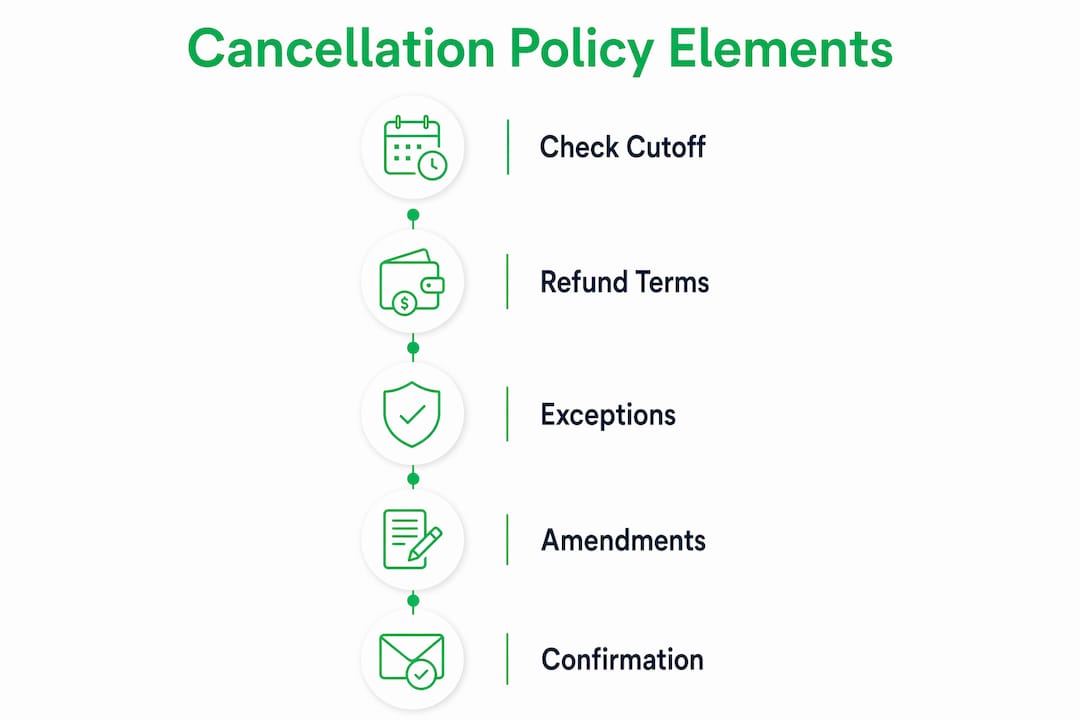
Every solid cancellation policy covers five things:
- Free-cancel window: the cutoff (usually 48+ hours before pickup) for a full refund
- Partial-refund window: the middle tier, commonly 24–48 hours out, where you get back roughly half
- No-refund/no-show zone: inside 24 hours or if the driver waits past the free waiting period
- Flight-tracking and delay handling: whether the provider monitors your flight and adjusts automatically
- Refund method and timeline: original payment method vs. credit, and how many business days
One practical rule: if your plans are uncertain, book with a provider that offers free cancellation at 48+ hours and confirmed flight monitoring. It costs nothing extra and saves real money when itineraries shift.
Table of Contents
- What a clear cancellation policy must include
- Free cancellation windows: what the fine print actually says
- Why changing a booking is often smarter than canceling
- How flight delays and cancellations affect your transfer booking
- How refunds are calculated and processed
- How to read a provider’s cancellation policy quickly
- Sample cancellation policy templates you can use as a reference
- Exactly how to cancel a transfer, step by step
- Legal consumer rights for airport transfer cancellations
- How third-party booking platforms differ from direct providers
- Key Takeaways
- The real risk most travelers overlook
- Zont Cab makes cancellations predictable, not stressful
- Useful sources and further reading
What a clear cancellation policy must include
A policy that protects you will spell out every one of these elements without making you dig through linked terms or confirmation-email footnotes.
- Free-cancellation window: the exact hour cutoff (e.g., “72 hours before scheduled pickup”) and whether it’s measured from pickup time or flight arrival
- Partial-refund tiers: the percentage refunded in each window, stated as a number, not vague language like “a portion”
- No-show definition: how long the driver waits, what triggers a no-show, and whether any refund applies
- Amendment rules: whether time or passenger-count changes are free, and what triggers a full cancel-and-rebook
- Flight-delay handling: whether the provider monitors your flight and holds the driver, or whether you must call manually
- Peak/holiday exceptions: many providers tighten windows around major holidays or special events; this should be stated explicitly
- Refund method and processing time: original card, service credit, or voucher, and the number of business days
- Dispute process: a named contact channel and response commitment
Why does each element matter? The partial-refund percentage tells you your worst-case cost if plans change at the last minute. The no-show definition tells you whether a 45-minute immigration line could cost you the full fare. The dispute process tells you whether you have any recourse at all.
Pro Tip: The most common place providers bury exceptions is in the confirmation email, not the booking page. Read the confirmation the moment it arrives, before your plans change. If the cancellation terms in the email differ from what the booking page showed, contact support immediately and get the correct terms in writing.
Free cancellation windows: what the fine print actually says
Industry-standard refund tiers show a consistent pattern: canceling well before the pickup time earns a full refund, canceling closer to the pickup time earns a partial refund, and last-minute cancellations typically mean no refund. But the window length often scales with vehicle size, because larger vehicles are harder to redeploy on short notice.

Some providers publish per-vehicle windows that include a free-cancel window, a partial-refund window, and a no-refund cutoff, typically increasing in length with the size of the vehicle, but exact times and refund percentages vary by provider and are stated as approximate.
Shared shuttle services tend to be the strictest because operators need minimum passenger counts to run the route profitably. A last-minute cancellation on a shared shuttle often results in no refund at all.
One detail many travelers miss: the clock usually starts from your scheduled pickup time, not your flight’s departure or landing. If your pickup is at 6:00 AM and you cancel at 7:00 AM the day before, you may already be inside the 24-hour window even though it feels like “the day before.”
Here’s how the math plays out across four scenarios:
- Cancel 72+ hours out: Full refund in almost every case, regardless of vehicle type.
- Cancel 48–72 hours out: Full refund for sedans and most private vehicles; partial for coaches and shuttles.
- Cancel 24–48 hours out: Partial refund (roughly 50%) across most vehicle types; no refund for strict shuttle operators.
- Cancel inside 24 hours or no-show: No refund in the vast majority of cases; some providers offer a credit toward a future booking.
Why changing a booking is often smarter than canceling
The direct answer: amendments usually avoid cancellation fees entirely, as long as the route and vehicle stay the same. A time change or passenger-count adjustment on the same booking is treated as a modification, not a cancellation, so no refund tier applies.
Common amendment rules across the industry:
- Free time adjustments: changing your pickup time within the same booking is typically free up to 6–24 hours before pickup
- Passenger-count changes: usually free if the vehicle can still accommodate the group
- Route changes: frequently processed as a cancel-and-rebook, which triggers the cancellation policy
- Vehicle upgrades or downgrades: same as route changes — expect a new booking to be created
- Flight-number updates: almost always free; providers want the correct flight number for tracking.
The practical implication is clear. If your flight time shifts by two hours, call or message the provider and ask for a time amendment rather than canceling and rebooking. You keep your booking, your driver, and your original price.
Pro Tip: When requesting an amendment, use the word “amendment” or “modification” explicitly, not “cancel and rebook.” Send it in writing (app message or email) and ask for a confirmation reply. That paper trail matters if the change gets processed incorrectly and you need to dispute a fee.
How flight delays and cancellations affect your transfer booking
Many professional transfer providers monitor flights and hold the driver when a delay is detected, but this is a provider policy, not a legal requirement. The rules vary, and your remedy depends entirely on what the provider’s terms say.
DOT rules on airline refunds do not automatically apply to ground transportation. The U.S. Department of Transportation’s 24-hour refund rule covers airline tickets only. If your flight is canceled and you want a refund on your transfer, you need to go to the transfer provider directly, not the airline.
Here’s what most providers do in practice when flights are delayed:
| Flight type | Typical free waiting time after landing | No-show trigger |
|---|---|---|
| Domestic | 30 minutes | After 30 minutes at arrivals |
| International | 60 minutes | After 60 minutes at arrivals |
| Hotel / address pickup | 10 minutes | After 10 minutes at door |
Providers commonly include this free waiting time in their standard terms. After that window closes, the booking is marked as a no-show and no refund is issued. Flight-tracking services exist precisely to extend this window automatically when a delay is confirmed.
When your flight is outright canceled or diverted, take these steps:
- Contact the transfer provider immediately, before the original pickup time passes.
- Request a reschedule to your new flight or arrival time.
- Ask for written confirmation of the change.
- If the provider cannot accommodate the new time, request a refund and provide your airline’s cancellation confirmation as documentation.
For flight disruption scenarios that affect your pickup, having the airline’s written cancellation notice significantly strengthens a refund or credit request.
Pro Tip: Screenshot your airline’s delay or cancellation notification the moment it appears in the app. Include the flight number, the original departure time, and the new status. Send that screenshot to your transfer provider immediately. Providers are far more likely to waive fees or issue credits when you can show documented airline disruption rather than just calling to say your flight is late.
How refunds are calculated and processed
Refunds are almost always issued to the original payment method, not as a credit, unless the provider explicitly offers a credit option and you choose it. Processing times typically run 3–14 business days depending on your bank, the payment processor, and whether the booking was made through a third-party platform.
Factors that affect how long your refund takes:
- Your bank’s processing speed: even after the provider initiates the refund, your bank may take 3–5 additional business days to post it
- Cross-currency transactions: if you paid in a foreign currency, the refund goes back at the current exchange rate, which may differ from what you paid
- Third-party platform involvement: if you booked through a marketplace, the platform processes the refund first, then your bank processes it, adding days
- Provider’s internal approval cycle: some providers batch refunds weekly rather than processing them daily
Partial refunds are usually stated as a percentage of the total fare rather than a flat fee, with the partial amount varying by provider and booking. Some providers instead charge a flat cancellation fee (e.g., $25 or $30) and refund the remainder, which can be more favorable on higher-priced bookings.
If your refund hasn’t appeared after 14 business days, contact the provider’s support with your booking reference, the date you requested the cancellation, and any written confirmation you received. If the provider confirms the refund was issued but your bank hasn’t posted it, contact your card issuer directly with the refund reference number.
When a provider cancels for operational reasons, standard practice is a full refund to the original payment method or a free rebook at no additional cost to you.
How to read a provider’s cancellation policy quickly
A three-minute scan before you book can save you a significant amount of money. Run through this checklist in order:
- Free-cancel window: Is the cutoff stated in hours, and is it measured from pickup time or flight arrival?
- Flight-tracking: Does the provider monitor your flight automatically, or do you have to call if you’re delayed?
- Refund method: Does the refund go back to your original payment, or only as a credit?
- No-show definition: How long does the driver wait, and what exactly triggers a no-show?
- Peak/holiday exceptions: Are there tighter windows around major holidays or events?
Red flags worth walking away from:
- No stated wait time for flight arrivals
- Cancellation terms only visible after clicking through to a separate linked document
- No written cancellation confirmation offered
- “Non-refundable” applied to the entire booking with no exceptions for airline disruptions
- No named dispute or escalation channel
If a policy is unclear, ask these questions before you book: “What is your exact free-cancellation cutoff in hours?” and “Do you track my flight automatically?” A provider that can’t answer both questions clearly is one worth reconsidering. For a broader checklist of warning signs, the airport transfer red flags list covers the most common provider issues travelers encounter.
Sample cancellation policy templates you can use as a reference
These are realistic, industry-aligned policy templates. Use them to compare what a provider sends you, or to ask for clearer terms if a provider’s policy is vague.
Template 1: Private sedan (standard)
Usage notes: This is the most common structure for private sedan bookings. The 48-hour full-refund window is standard. If a provider offers only a 24-hour window for full refunds on a sedan, that’s below average.
Template 2: Shared shuttle (stricter)
Usage notes: Shared shuttles run on fixed schedules with minimum passenger requirements, which is why the window is tighter. The lack of automatic flight-delay accommodation is common for shuttles. If you’re on a connecting flight, a shared shuttle is a higher-risk choice.
Template 3: Hourly chauffeur / large vehicle
Usage notes: Large vehicles and hourly bookings carry higher operational costs, so the 72-hour full-refund window is standard. The clause about provider-side cancellations is one you should always look for and request in writing if it’s missing.
For group transfers, group transfer options often carry their own amendment and cancellation structures that differ from standard private bookings.
Exactly how to cancel a transfer, step by step
The fastest and safest route is the provider’s official cancellation channel, whether that’s an app, a booking portal, or a direct support line. Always get written confirmation before you consider the cancellation complete.
- Locate your booking reference. It’s in your confirmation email. You’ll need it for every step.
- Log into the provider’s app or portal. Most providers allow self-service cancellation up to their cutoff time. This creates an automatic timestamp.
- If no portal is available, call or message support directly. State your booking reference, the reason for cancellation, and the refund you expect based on the policy.
- Request written confirmation. Ask for an email or in-app message confirming the cancellation, the refund amount, and the expected processing time. Do not hang up or close the chat until you have this.
- Screenshot everything. The cancellation confirmation, the timestamp, and any refund reference number.
- Follow up if the refund doesn’t appear. After 14 business days, contact support with your confirmation and refund reference.
If phone or app methods aren’t available, here’s a message template you can send by email:
Submitting cancellation through the official booking portal and requesting written confirmation is the most reliable way to protect your refund claim. A verbal cancellation with no paper trail is very difficult to dispute if the refund doesn’t come through.

Legal consumer rights for airport transfer cancellations
Ground transportation in the U.S. is not governed by the same federal framework that covers airline tickets. The DOT’s automatic refund rules apply to air carriers, not to private transfer companies, shuttle operators, or ride-booking platforms. Your rights with a ground transfer provider come from the contract you agreed to at booking, not from federal aviation consumer protection law.
That said, several consumer protections do apply:
Contract law. When you book a transfer, you enter a contract. If the provider fails to perform (driver doesn’t show, vehicle doesn’t arrive) and refuses to refund, you have a breach-of-contract claim in small claims court. This is a real and accessible remedy for amounts under the small claims threshold in your state, which ranges from $2,500 to $25,000 depending on the state.
Credit card chargebacks. If a provider refuses a refund you’re entitled to under their own policy, a chargeback through your credit card issuer is a practical option. Document everything: the policy terms, your cancellation request, and the provider’s refusal. Card issuers generally side with cardholders when the documentation is clear.
State consumer protection laws. Most states have unfair and deceptive trade practices statutes that cover service contracts. A provider that advertises a refund policy and then refuses to honor it may be in violation of state consumer protection law. Your state attorney general’s office handles complaints.
FTC guidelines. The Federal Trade Commission’s guidance on refund policies requires that advertised terms be honored. If a provider’s booking page states a refund policy and the provider doesn’t follow it, that’s a potential FTC complaint.
The practical takeaway: you have more recourse than most travelers realize, but you need documentation. Keep every confirmation email, every cancellation request, and every response from the provider.
How third-party booking platforms differ from direct providers
Booking through a marketplace or aggregator adds a layer between you and the actual transfer operator, and that layer has its own cancellation rules that may not match the operator’s terms.
The key structural difference: some platforms allow free cancellation until a driver is assigned, while others lock in the operator’s cancellation policy the moment you confirm the booking. Once a driver is assigned, the individual carrier’s terms typically apply, which may be stricter than the platform’s headline policy.
What this means in practice:
Platform-level policies often advertise “free cancellation” prominently, but that window may be very short (sometimes just a few hours after booking) or conditional on no driver being assigned yet. Read the platform’s cancellation terms, not just the headline.
Operator-level policies kick in once the booking is confirmed with a specific driver or vehicle. These vary widely. A platform that aggregates dozens of operators will have dozens of different underlying policies, even if the booking interface looks uniform.
Refund routing through a platform takes longer. The platform processes the refund first, then your bank processes it. This can add 3–5 business days to the timeline compared to booking directly.
Dispute resolution is more complicated with a platform. If the operator and the platform disagree about whether a refund is owed, you may be caught in the middle. Direct bookings give you one point of contact.
The general rule: for flexibility and clarity, booking directly with a provider whose cancellation terms you’ve read and understood is lower risk than booking through a platform where the fine print may differ from the headline. When comparing providers, the airport transfer provider comparison guide covers what to look for in terms and service quality.
Key Takeaways
Understanding airport transfer cancellation policies comes down to one rule: know your cutoff window and get every cancellation in writing before you assume the refund is coming.
| Point | Details |
|---|---|
| Free-cancel window | Most providers offer a full refund for cancellations 48+ hours before pickup; shorter windows mean partial or no refund. |
| Amend before you cancel | Time and passenger-count changes usually avoid fees entirely; route or vehicle changes often trigger a full cancel-and-rebook. |
| Document airline disruptions | Screenshot airline delay or cancellation notices immediately and send them to your transfer provider to support a refund or credit request. |
| DOT rules don’t cover ground transfers | The U.S. DOT 24-hour refund rule applies to airline tickets only; your transfer refund rights come from the provider’s contract terms. |
| Zont Cab | Offers flight tracking, clear cancellation windows, and refunds to the original payment method, with 24/7 support across 120+ European cities. |
The real risk most travelers overlook
The conventional wisdom on airport transfer cancellations focuses on the refund percentage. That’s the wrong thing to optimize for. The percentage matters less than whether the provider actually tracks your flight.
Here’s why. A provider with a strict 24-hour no-refund policy but confirmed flight monitoring is often a better choice than one with a generous 48-hour refund window but no flight tracking. If your flight is delayed two hours and the provider is watching it, your driver waits and you pay nothing extra. If the provider isn’t tracking your flight, you land to find the booking marked as a no-show, and no refund policy in the world helps you at that point.
The second thing travelers underestimate is the amendment option. Most people go straight to canceling when plans change, which triggers the refund tier. A quick message asking for a time amendment, sent before the cutoff, costs nothing and preserves the booking. Providers almost always prefer an amendment to a cancellation because it keeps revenue on the books. That alignment of interests works in your favor.
One more thing worth saying plainly: credit card chargebacks are a real and underused tool. If a provider refuses a refund they owe you under their own stated policy, a chargeback with documented evidence is not aggressive, it’s appropriate. Keep every confirmation email and every cancellation request. That documentation is what wins disputes.
Zont Cab makes cancellations predictable, not stressful
The biggest frustration with airport transfer cancellations isn’t the policy itself. It’s not knowing what the policy actually says until something goes wrong. Zont Cab publishes clear cancellation windows, monitors your flight in real time, and processes refunds back to your original payment method, so there’s no ambiguity about where you stand.
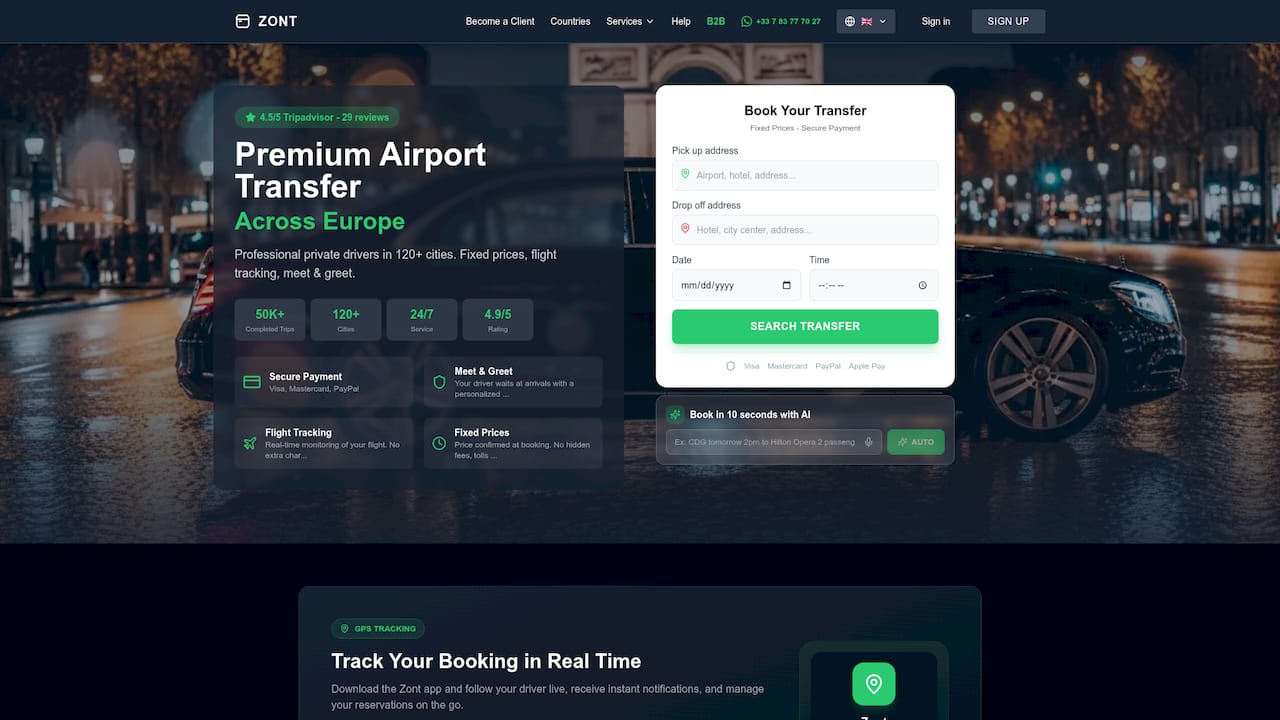
Zont Cab’s flight-tracking service means your driver adjusts automatically when your arrival time shifts, which eliminates the most common no-show scenario entirely. Fixed pricing means no surprise charges if your plans change. And with 24/7 multilingual support available across 120+ European cities, you have a real person to contact the moment an itinerary shifts, not a help-center article.
For travelers who want a transfer provider whose cancellation and amendment terms are straightforward from the start, browse Zont Cab’s airport transfer coverage by destination and book with the confidence that the terms you see are the terms you get.
Useful sources and further reading
- Refunds | U.S. Department of Transportation: The official DOT page on airline refund rules, including the 24-hour rule and what it does and does not cover.
- Refunds and Other Consumer Protections | U.S. DOT: The DOT’s 2024 final rule on automatic airline refunds, defining “significant change” and “cancellation” for air travel.
- Fly Rights | U.S. Department of Transportation: DOT’s consumer guide to airline delays, cancellations, and passenger rights, including what airlines are and are not required to provide.
- Buying a Ticket | U.S. Department of Transportation: DOT guidance on the 24-hour hold and refund requirement for airline tickets, and how it applies to tickets purchased through third-party agents.
- How to handle delayed arrivals: Practical explanation of how flight-monitoring services work and what providers do when flights are late.
- Airport transfer insurance benefits: How trip-protection options can supplement a provider’s cancellation terms when your exposure is high.