Airport Transfer Luggage Tips for a Smooth Journey
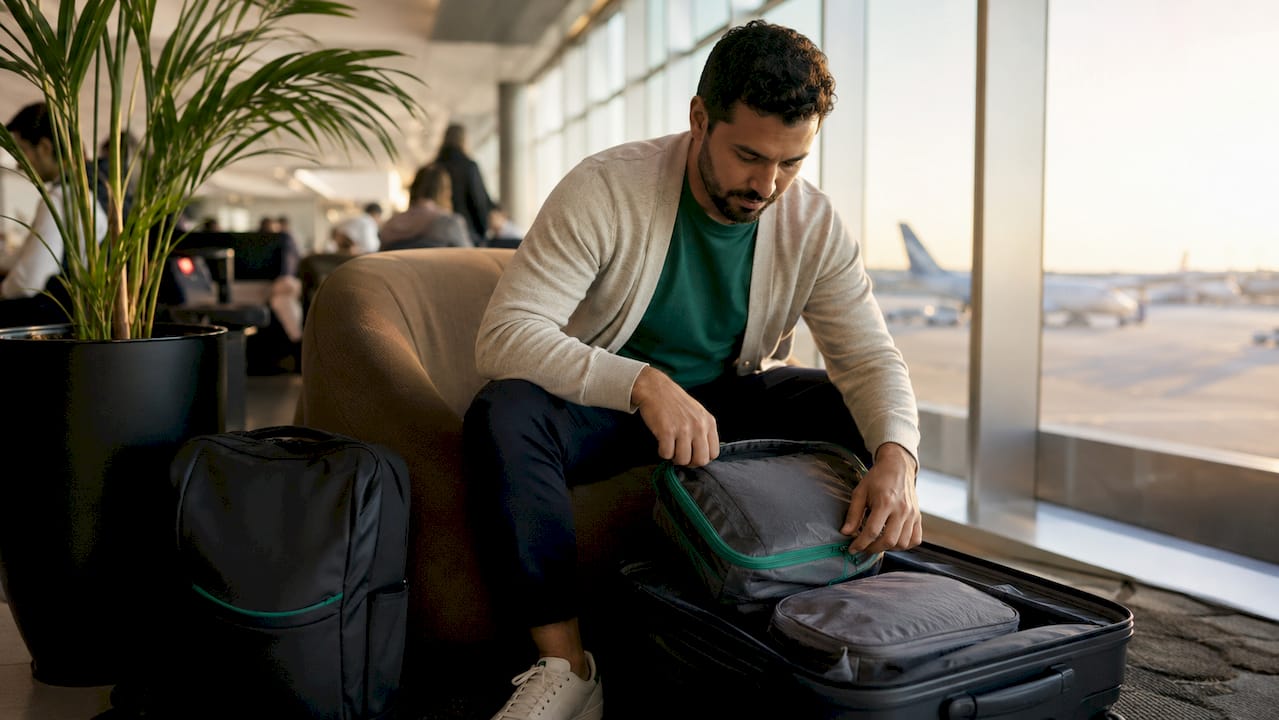
Airport transfer luggage tips are practical strategies for packing efficiently, selecting the right vehicle, and handling bags safely to avoid delays, injuries, and damaged belongings. Most travelers focus on flight logistics and forget that the ground transfer is where things go wrong. A mismatched vehicle, an overstuffed bag, or a strained back in the parking lot can derail a trip before it starts. The tips below cover every stage of the transfer process, from how you pack at home to how you communicate with your driver on arrival.
1. Match your vehicle to your luggage volume, not your headcount
The single biggest mistake travelers make is booking by passenger count instead of luggage volume. A group of three adults with three large suitcases will not fit comfortably in a standard economy sedan, even though the sedan seats four.
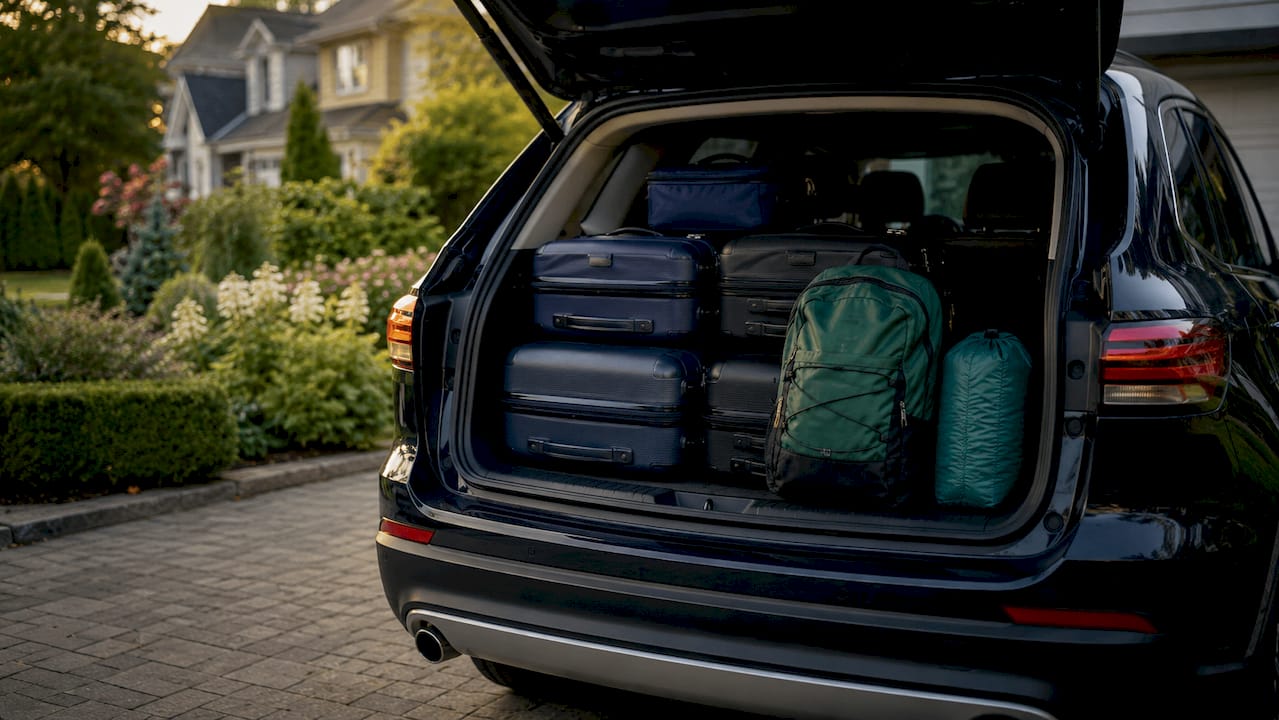
Vehicle trunk capacity tells the real story. A standard economy sedan holds roughly 420 liters of trunk space, which fits about 2 large check-in bags plus 1 carry-on. An SUV offers around 700 liters, accommodating 4 large check-in bags plus 3 carry-ons. That difference matters enormously when you are traveling with ski equipment, strollers, or multiple checked bags.
| Vehicle type | Trunk volume | Large suitcases | Carry-ons |
|---|---|---|---|
| Economy sedan | ~420L | 2 | 1 |
| Comfort sedan | ~500L | 3 | 2 |
| SUV | ~700L | 4 | 3 |
| Minivan | ~900L | 5–6 | 4 |
For groups with oversized gear, a minivan transfer is the right call. Cramming bags into an undersized trunk risks damaged zippers, scratched cases, and a driver who cannot close the trunk safely.
Pro Tip: If you are traveling with golf clubs, a bicycle, or a medical device, upgrade one vehicle class above what you think you need. The extra space costs less than replacing damaged equipment.
2. Use packing cubes and compression bags to cut volume
Packing cubes and compression bags reduce luggage volume by 20–30%. That reduction is not just about fitting more. It prevents internal shifting that damages suitcase walls and stresses zippers during loading and unloading.
Compression bags work best for bulky items like jackets, sweaters, and jeans. Packing cubes organize clothing by category, which means you are not unpacking everything to find one item at your destination. Brands like Eagle Creek, Osprey, and Compression Packing Cubes by Gonex are widely available and hold up across hundreds of trips.
Even weight distribution inside your bag matters as much as total volume. Pack heavier items close to the wheels and lighter items near the top. This keeps the bag stable when it stands upright and reduces the risk of it tipping and falling during loading.
Pro Tip: Roll soft clothing items instead of folding them, then use them to cushion fragile items like bottles or electronics. You save space and protect valuables without adding bubble wrap.
3. Protect your luggage from damage before you leave home
Luggage covers and corner guards extend the lifespan of your bags by shielding them from scratches and rough handling during transfers. Airport baggage handling is not gentle, and the transfer vehicle loading process adds another round of stress to your case.
TSA-approved locks are worth using on every checked bag. They allow security to inspect without cutting the lock, and they deter opportunistic theft during transfers. Brands like Master Lock and Forge offer TSA-approved options for under $15.
Soft-sided bags absorb impact better than hard-shell cases when bags are stacked or pressed against each other in a trunk. If you travel with fragile items, a soft-sided bag with internal compression straps gives you more control over how contents are secured.
4. Lift and carry luggage safely to avoid injury
Proper lifting technique prevents the most common travel injuries: lower back strain and medial epicondylitis, which is the condition known as “suitcase elbow.” Both injuries come from the same source: lifting a heavy bag incorrectly or carrying it on one side for too long.
Follow these steps every time you lift a heavy bag:
- Stand alongside the bag, not in front of it
- Bend your knees, not your waist
- Hold the bag close to your body as you stand
- Avoid twisting your spine while lifting
- Use the top or side handles, never the telescoping handle
Never lift luggage by the telescoping handle. That handle is designed for pulling on flat surfaces, not for bearing the full weight of a loaded bag. Using it to lift will crack the housing or bend the internal rails.
Carrying bags in both hands distributes weight evenly and reduces spine strain. If you only have one bag, switch hands every few minutes. Carrying a heavy bag on one side for extended periods increases the risk of suitcase elbow significantly.
5. Communicate special handling needs to your transfer service
Communicating special luggage needs during booking secures better treatment and reduces damage risk, especially for fragile or oversized items. Most transfer services have a notes field during booking. Use it.
If you are traveling with a musical instrument, medical equipment, or a stroller, say so at booking. The driver can prepare the vehicle accordingly and may bring additional securing straps or padding. Showing up with a cello and expecting it to fit in a sedan trunk without prior notice is a recipe for a stressful arrival.
For fragile items, label the bag clearly with a “Fragile” tag and mention it verbally when the driver loads the vehicle. Drivers who know a bag contains breakables will handle it differently than an unmarked suitcase.
6. Pre-book your transfer at least 24 hours in advance
Pre-booking at least 24 hours ahead saves 30–50% compared to walk-up rates and guarantees vehicle availability. That price gap is significant on longer routes or when you need a larger vehicle like an SUV or minivan.
Pre-booking also locks in a fixed price. Walk-up rates and on-demand apps use surge pricing, which spikes during peak arrival windows like early mornings, holiday weekends, and major events. A pre-booked fixed-price transfer removes that variable entirely.
Pre-booked transfers also reduce traveler stress, particularly when you are managing heavy or oversized luggage. Knowing your vehicle is confirmed and sized correctly before you land changes the entire arrival experience.
7. Share your flight number for real-time tracking
Transfer services that track flights adjust pickup timing automatically for delays, early arrivals, gate changes, and diversions. Most services provide a 30–60 minute grace period before extra waiting fees apply. That buffer only works if the driver knows your actual flight status.
Providing your flight number at booking is the single most effective way to prevent a missed pickup. Without it, your driver is working from a scheduled arrival time that may be 45 minutes off by the time you land.
Pro Tip: Confirm your luggage count and vehicle type with the driver or service at least two hours before your flight lands. A quick message through the service app or a direct call takes two minutes and eliminates the most common transfer problems.
8. Save your booking details offline before you land
Airport Wi-Fi and roaming data fail during peak arrival times. A screenshot of your booking confirmation and driver contact number, saved to your camera roll before you board, costs nothing and solves a real problem.
This is especially relevant when traveling internationally. Roaming data may not activate immediately after landing, and airport Wi-Fi login pages can be slow or blocked. If you cannot reach your driver and your driver cannot reach you, the pickup falls apart regardless of how well everything else was planned.
Save the driver’s name, phone number, vehicle description, and meeting point. If the service uses a meet-and-greet model, save the specific terminal and sign description so you can find your driver without needing a data connection.
9. Know the difference between curbside pickup and meet-and-greet
Curbside pickup means your driver waits at the arrivals curb for a set window. Meet-and-greet means the driver enters the terminal and waits at baggage claim or arrivals hall with a name sign. For travelers with heavy luggage, meet-and-greet is the better option.
The practical difference is distance. With curbside pickup, you are responsible for getting your bags from baggage claim to the curb, which can mean 200–400 meters of walking with a loaded cart. With meet-and-greet, the driver assists from the moment you clear customs.
If you are traveling with elderly passengers, young children, or more than two large bags, always book the meet-and-greet option. The price difference is small. The effort difference is not.
10. Use luggage storage options for layovers and long transfers
Luggage storage services like Bounce, Stasher, and LuggageHero operate in most major European airports and city centers. They charge by the hour or day and let you drop bags securely while you explore or wait for a connecting transfer.
This is particularly useful for travelers with long layovers who want to move freely without dragging bags through a city. Storing bags also reduces the vehicle size you need for a short city transfer, which can lower your transfer cost.
For transferring luggage between flights on separate tickets, check whether your airline offers interline baggage agreements. If not, you will need to collect and re-check bags yourself, which adds time and physical effort to the transfer.
Key takeaways
Effective airport transfer luggage management requires matching vehicle size to bag volume, packing with compression tools, lifting correctly, and pre-booking with flight tracking to avoid delays and damage.
| Point | Details |
|---|---|
| Vehicle selection | Book by luggage volume, not passenger count; SUVs fit 4 large bags, sedans fit 2. |
| Packing efficiency | Compression bags and packing cubes cut volume by 20–30% and prevent internal damage. |
| Safe lifting | Use top or side handles, bend your knees, and carry bags in both hands to prevent injury. |
| Pre-booking advantage | Booking 24 hours ahead saves 30–50% and guarantees the right vehicle is available. |
| Offline preparation | Save booking confirmation and driver contact offline before landing to avoid connectivity failures. |
What I have learned from getting this wrong
I spent years treating airport transfers as an afterthought. I would book whatever was cheapest, show up with three bags, and spend the first ten minutes of every arrival arguing with a driver about whether my luggage would fit. The problem was never the driver. It was me.
The shift happened when I started booking by luggage volume instead of price. Once I matched the vehicle to what I was actually carrying, the entire arrival experience changed. No negotiating at the curb. No cramming a hard-shell case into a trunk that was two inches too short.
The injury prevention piece surprised me. I had a mild case of suitcase elbow after a two-week trip through four cities. My orthopedist explained that carrying a single heavy bag on one side for even short distances adds up over a long trip. Switching to two smaller bags and distributing weight evenly fixed it completely.
The most underrated tip on this list is saving your booking details offline. I have been stuck at Charles de Gaulle with no data signal and a driver I could not reach. It is a fixable problem that feels catastrophic in the moment. A screenshot in your camera roll takes five seconds and eliminates it entirely.
My honest advice: treat the transfer like part of the trip, not a footnote. The right vehicle, a properly packed bag, and a confirmed booking with flight tracking will do more for your travel experience than any airport lounge.
— Arthur
Travel smarter with Zont Cab
Managing luggage on airport transfers gets easier when your transfer service is built around it. Zont Cab operates across 120+ European destinations with a fleet that includes economy sedans, SUVs, and minivans, so you can match your vehicle to your actual luggage load, not just your passenger count.
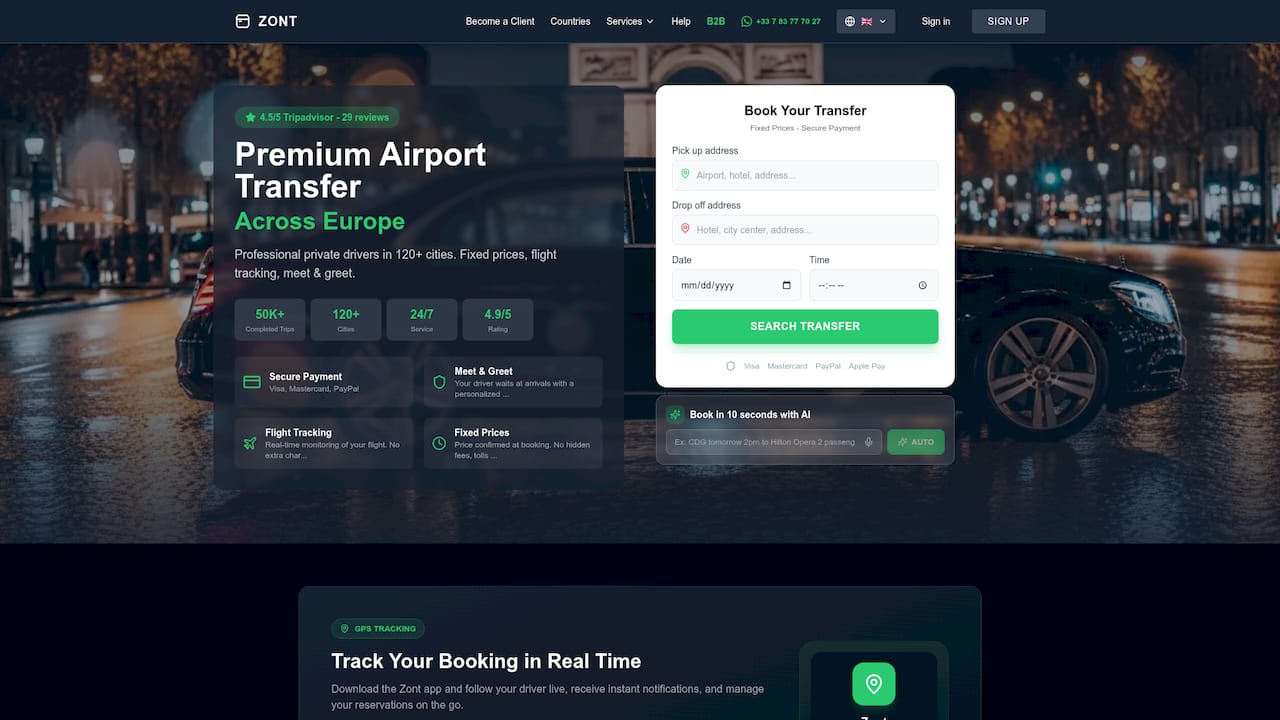
Zont Cab uses real-time flight tracking to adjust your pickup automatically for delays or early arrivals, and every booking comes with a fixed price and no hidden fees. The meet-and-greet service means a driver meets you at baggage claim, not at the curb. With over 50,000 completed trips and a 4.5-star TripAdvisor rating, Zont Cab is the transfer service that handles the logistics so you can focus on the trip.
FAQ
How do I choose the right vehicle for my luggage?
Book based on luggage volume, not passenger count. A standard economy sedan fits 2 large check-in bags; an SUV fits 4. Three travelers with 3 large suitcases typically need an SUV or minivan.
When should I pre-book my airport transfer?
Pre-book at least 24 hours before your flight. Booking that far in advance saves 30–50% compared to walk-up rates and guarantees your vehicle type is available.
Why should I provide my flight number to the transfer service?
Flight numbers allow the transfer service to track real-time delays, gate changes, and early arrivals. Most services offer a 30–60 minute grace period tied to your actual landing time, not your scheduled arrival.
What is the safest way to lift heavy luggage?
Stand alongside the bag, bend your knees, and hold the bag close to your body as you stand. Always use the top or side handles. Never lift by the telescoping handle, which is designed for pulling, not load-bearing.
What luggage storage options exist for long layovers?
Services like Bounce, Stasher, and LuggageHero offer hourly and daily storage at major European airports and city centers. They let you drop bags securely while you wait for a connecting transfer or explore the city.