CDG to Reims: 42–46 min TGV, €6 Coach, or a Private Transfer

The quickest way from Charles de Gaulle to Reims is the TGV, with the fastest services covering the route in about 42 to 46 minutes. Coach travel costs less, often between €6 and €23 when booked ahead, but takes closer to two and a half hours. If you want door-to-door simplicity with no station transfers or timetable guesswork, a pre-booked private transfer is the most convenient choice, especially for late flights, families, or groups with luggage.
TL;DR:
- The fastest train from Charles de Gaulle to Reims takes 42 to 46 minutes but usually involves a transfer in Paris, requiring some planning for timing.
- Coach travel is the cheapest option, with fares from €6 to €23 and durations nearing two and a half hours, making it suitable for flexible budgets.
- Driving offers the most flexibility with an estimated 1 hour 30 minutes to 1 hour 45 minutes travel time along the toll A4 motorway, ideal for exploring beyond Reims.
- Private transfers are the most reliable for late flights, families, or groups, as they are booked in advance, track flights automatically, and eliminate station transfers.
- Booking train tickets two to four weeks ahead often reduces fares to €30–€60, while coach tickets should be purchased early to get the lowest prices before they sell out.
Table of Contents
- Transport Options From CDG to Reims at a Glance
- How Do You Get a Train From CDG to Reims?
- What Are Your Bus and Coach Options From CDG to Reims?
- How Long Does It Take to Drive From CDG to Reims?
- Private Transfers and Rideshares: What’s the Real Difference?
- Which Option Should You Actually Choose?
- Why the Cheapest Option Rarely Feels Like the Best One
- Book a Direct Ride From CDG Instead of Managing Transfers Yourself
- Sources
- FAQ
Transport Options From CDG to Reims at a Glance
Four realistic ways exist to get from the airport to Reims, and each one serves a different kind of traveler. Speed, price, and convenience rarely line up in the same option, so the right pick depends on what you’re optimizing for.
- Train (TGV): The fastest option at roughly 42 to 46 minutes on the quickest services, with fares generally between €30 and €60 depending on how early you book. Best for solo travelers and business trips where time matters more than cost.
- Coach/bus: The cheapest option, taking about 2 hours 25 minutes to 2 hours 50 minutes, with fares as low as €6 to €23 on advance bookings. Best for budget travelers with flexible schedules.
- Driving (rental or own car): Covers roughly 123 to 148 km depending on the route, usually taking 1 hour 30 minutes to 1 hour 45 minutes via the A4 motorway. Best if you need flexibility to stop en route or plan to explore the Champagne region afterward.
- Private transfer or rideshare: Door-to-door in about 1 hour 30 minutes to 2 hours depending on traffic, with fixed pricing and no transfers to manage. Best for families, groups, late arrivals, or anyone who just doesn’t want to think about logistics after a long flight.
Each mode gets a full breakdown below, including where to board, what to expect on arrival, and how to actually buy your ticket instead of guessing at a kiosk with a tight connection looming.
How Do You Get a Train From CDG to Reims?
Trains are the fastest way to cover the roughly 130 kilometers between the airport and the Champagne capital, and the route runs through one of France’s better-connected rail corridors. The catch is that most itineraries involve a change, so a little planning goes further here than on a straight point-to-point run.
Where you board and where you arrive
CDG has its own TGV station, Aéroport Charles de Gaulle 2 TGV, connected directly to Terminal 2 via the Roissypole walkway and shuttle system. Signage throughout Terminal 2 points to the TGV/RER station, and it’s a short, flat walk from most check-in areas, not a shuttle bus ride across the tarmac. Most CDG to Reims itineraries land you at Reims station in the city center, though some routings via Paris stop at Reims Champagne Ardenne TGV on the outskirts before a local connection into town, so it’s worth checking your specific arrival station before you book, since it affects how you get to your final destination.
Journey times and frequency
The fastest CDG to Reims train journeys take between 42 and 46 minutes, according to schedule data from Trainline. That’s genuinely fast for a route covering over 100 kilometers, and it rivals or beats driving once you factor in airport parking and city traffic.
Fast Fact: Trainline’s schedule data shows around 5 to 9 trains running the CDG to Reims corridor each day, with timing that varies by day of the week and season. That’s a real range, not a fixed number, so don’t assume the same departure exists every day you travel.
Most of these journeys require one change, typically at a Paris station, before continuing on to Reims. A single change adds walking time and a buffer for delays, so budget at least 45 to 60 minutes for a connection rather than booking the tightest possible window.
First departures from CDG tend to run in the 7:00 AM to 9:00 AM window, and last realistic connections into Reims land somewhere between late afternoon and roughly 9:00 PM, depending on the operator and the day. These windows shift with the seasonal timetable, so always check the exact date you’re traveling rather than relying on a general rule.

What tickets actually cost
Ticket prices for this route swing widely based on how far ahead you book. According to fare data from Omio, advance train fares often run in the €30 to €60 range, while last-minute, day-of tickets climb noticeably higher. SNCF Connect (the national rail carrier’s own booking platform), Trainline, and Omio all sell tickets for this route, and prices are usually identical across platforms since they pull from the same fare inventory. The real lever is timing: book two to four weeks out if your dates are fixed, and you’ll typically land in the lower half of that range.
- Buy through SNCF Connect, Trainline, or Omio, all of which let you filter by departure time and show the number of changes upfront.
- Book seat reservations when the option appears, since TGV service legs require them even though the connecting regional leg often doesn’t.
- Keep your phone or printed ticket handy for both legs, since inspectors check tickets on board rather than at a barrier.
- Standard checked luggage and a carry-on are fine on both TGV and regional trains, with no formal weight limit like you’d find at an airport check-in counter, but overhead racks fill up fast on busier departures.
Pro Tip: If your connection window in Paris is under 40 minutes, don’t book it. A single signal delay on the first leg is enough to strand you, and the next train might not run for another hour.
What Are Your Bus and Coach Options From CDG to Reims?
Coaches are the budget play on this route, and the tradeoff is straightforward: you save money and lose time. Journeys typically run 2 hours 25 minutes to 2 hours 50 minutes, roughly three times longer than the fastest train, according to route data from Rome2Rio.
Fares are where coaches earn their keep. Advance bookings can drop as low as €6 to €15, with typical fares landing somewhere between €12 and €23 depending on the operator and how close to departure you buy. That’s a meaningful gap next to the €30 to €60 you’d pay for an advance train ticket, and it only widens if you’re booking last minute.
Where to board and who runs the route
Coaches to Reims generally depart from the Roissypole bus terminal at CDG, the same hub area that serves the TGV station, so the walk from your terminal is similar either way. Operators including BlaBlaCar Bus and FlixBus run this corridor, though schedules are noticeably thinner than rail, often just a handful of departures per day rather than the 5 to 9 daily trains, per Rome2Rio’s coach data. Arrival points vary by operator: some drop passengers at Reims Champagne Ardenne TGV on the edge of town, others go straight into the city center, so check your specific stop before assuming you’ll land downtown.
- Frequency is limited compared to trains, often just two or three departures daily, so check the schedule before building a same-day itinerary around it.
- Weekend and holiday timetables can differ from weekday schedules, sometimes with fewer runs, so verify the exact date rather than assuming a weekday pattern applies.
- Luggage limits are typically one large bag and one carry-on per passenger, tighter than trains, so check your operator’s policy if you’re traveling with sports equipment or oversized cases.
- Coaches generally lack the legroom, power outlets, and quiet-car sections that make a nearly three-hour train ride bearable, so factor comfort into the decision if you’re jet-lagged.
Pro Tip: Book your coach ticket the moment your travel dates are confirmed. The lowest fares in that €6 to €15 range sell out first, and prices climb steadily as the departure date approaches, sometimes doubling in the final week.
How Long Does It Take to Drive From CDG to Reims?
Driving distance between the airport and Reims runs roughly 123 to 148 km depending on the exact route you take, with typical drive times of 1 hour 30 minutes to 1 hour 45 minutes under normal traffic, according to Rome2Rio’s route estimates. A separate estimate from TravelMath puts the drive closer to 1 hour 34 minutes, which lines up well as a realistic middle figure if you’re planning around light to moderate traffic.
The A4 motorway is the direct route, running northeast from the Paris region straight into the Champagne area. It’s a fast, well-maintained toll road, and outside of rush hour or holiday weekends, it’s genuinely one of the more relaxing drives in the Île-de-France area, mostly open countryside once you clear the immediate airport zone.
- Peak traffic near CDG and the eastern Paris ring can add 20 to 30 minutes, so avoid departing between 4:00 PM and 7:00 PM on weekdays if you can help it.
- Check live traffic conditions through a navigation app like Waze or Google Maps before you leave the rental counter, since accidents on the A4 can cause long backups with few alternate routes.
- The A4 is a toll motorway, so budget for toll charges along the way, payable by card or cash at the barriers.
- Rental cars at CDG are plentiful, but a one-way rental (picked up at CDG, dropped off in Reims) often costs more than a round trip, so compare that math before booking.
- Parking in central Reims is metered on-street and available in several covered garages near the cathedral and station, with most city-center hotels offering paid parking arrangements for guests.
Driving makes the most sense if you’re planning to explore the Champagne region beyond Reims itself, since a car gives you access to smaller towns and vineyard visits that trains and coaches simply don’t reach.
Private Transfers and Rideshares: What’s the Real Difference?
A pre-booked private transfer and an on-demand rideshare solve the same basic problem, getting you from the terminal to your destination by car, but they work very differently once your flight actually lands. A rideshare or airport taxi is booked (or hailed) after you’ve cleared customs, with pricing that can vary based on demand, traffic, and how far the driver has to come to find you in a crowded arrivals hall. A pre-booked transfer locks in your price and driver before you even leave home, with the pickup already scheduled around your flight number.
That distinction matters most when things don’t go according to plan. If your flight from Reims’s home country lands three hours late, an on-demand ride is just another queue to stand in, tired, with bags, hunting for a driver in a packed arrivals zone. A pre-booked transfer service that tracks your flight adjusts the pickup time automatically, so your driver is there when you actually land, not when the original schedule said you would.
Price-wise, private transfers cost more than a coach ticket and generally more than a train fare too, but you’re paying for certainty rather than speed alone. For groups of three or more, the math often evens out once you compare a single fixed transfer fare against multiple train or coach tickets plus the hassle of coordinating everyone’s luggage through a station change.
- Confirm the service includes live flight tracking, not just a scheduled pickup time based on when you booked.
- Ask whether meet and greet is included, meaning a driver waiting inside arrivals with your name displayed, rather than a curbside pickup you have to locate yourself.
- Check vehicle capacity against your group size and luggage count before booking, since a sedan rated for four passengers can feel cramped with four large suitcases.
- Review the cancellation policy, especially if your travel plans could shift, and confirm the driver’s identity is verifiable through the booking platform.
Pro Tip: If you’re landing after 9:00 PM or traveling with young kids, skip the train transfer entirely. A missed connection at that hour in a Paris station with a stroller and two suitcases is exactly the scenario pre-booked transfers exist to prevent.
Which Option Should You Actually Choose?
Match your choice to what you actually care about most on this trip, not what sounds best in theory. Time, budget, luggage, and group size each point toward a different answer, and being honest about your real constraints saves you from a bad call at 6:00 AM at the airport.
- Solo traveler on a tight budget: Take the coach. The 2h25 to 2h50 journey is longer, but fares as low as €6 to €15 make it the clear winner when time isn’t the priority. Book at least two weeks ahead for the lowest fares.
- Business traveler on a schedule: Take the train. The 42 to 46 minute fastest journey beats every other option by a wide margin, and the higher fare is easy to justify against a full afternoon saved. Reserve seats in advance through SNCF Connect or Trainline.
- Family with kids and luggage: Book a private transfer. Juggling strollers, car seats, and multiple bags through a train change or a coach terminal turns a simple trip into a stressful one. Confirm your vehicle size when booking to make sure everyone and everything fits.
- Small group of 3 to 5 people wanting flexibility: Rent a car and drive the A4, or book a larger private transfer vehicle. Either option skips the need to coordinate multiple train or coach tickets and lets everyone travel together.
- Anyone landing late at night or with a delayed flight: Book a transfer with flight tracking. It’s the only option on this list that adjusts automatically when your arrival time changes.
Why the Cheapest Option Rarely Feels Like the Best One
Every guide to this route leads with the same framing: train is fast, coach is cheap, driving is flexible, pick one. That framing skips the part that actually determines whether your trip feels smooth or miserable, which is what happens when something goes wrong.
Coaches look like the smart budget move on paper, and for a rested traveler with one bag and a flexible afternoon, they usually are. But international flights don’t always land on time, and a coach with only two or three daily departures doesn’t forgive a missed connection the way a train running every couple of hours can. I’ve seen the math work out fine for plenty of travelers and completely fall apart for others landing three hours late with a coach that already left.

The train’s speed advantage is real, but it hides a quieter risk: most itineraries require a change, and a change means a buffer you have to build in yourself. Skip that buffer to save twenty minutes, and one delayed first leg turns into a missed second one.
None of this means trains or coaches are bad choices. It means the “cheapest” or “fastest” option on a spreadsheet isn’t automatically the least stressful one in real life, especially after a long-haul flight when your patience for logistics is already gone. For families, late arrivals, or anyone who values predictability over saving forty euros, a pre-booked transfer with flight tracking removes the variables that actually cause travel stress, not the ones on the timetable.
— Arthur
Book a Direct Ride From CDG Instead of Managing Transfers Yourself
A pre-booked private transfer service offers an alternative to piecing together trains, coach connections, and station transfers for your trip out of Charles de Gaulle. The driver tracks your flight, meets you inside arrivals with a name displayed, and takes you directly to Reims or your destination with no changes or timetable worries.
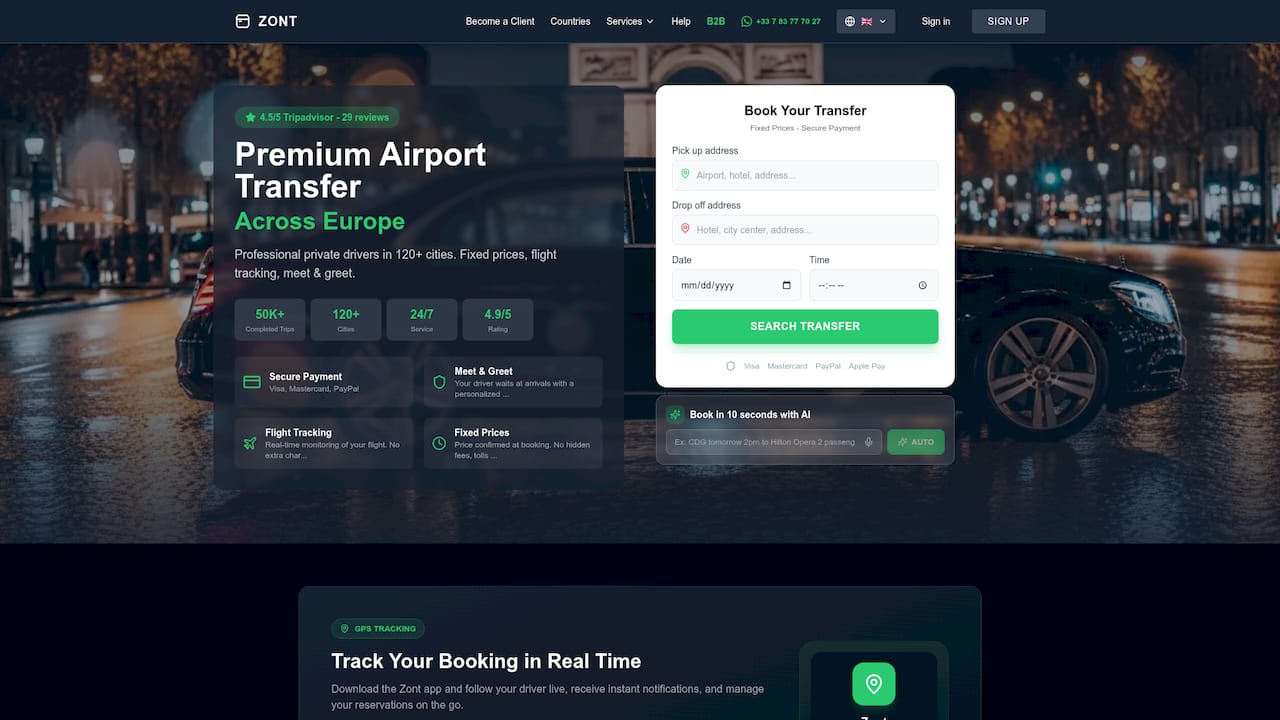
Pricing is fixed before you travel, so the fare you see at booking is the fare on your invoice, with no surge pricing for a delayed flight or a longer-than-expected pickup wait. Vehicle options typically range from sedans to larger vans and minibuses for groups, accommodating varying passenger and luggage needs. If you’re continuing on from Reims into the wider Champagne region for a private event or celebration, Zont’s concierge services also cover full-day chauffeur arrangements.
Head to Zont’s Paris airport transfer page to check vehicle options and lock in your fare, or browse the 8-seat vehicle options if you’re traveling as a family or small group. If your trip includes a stop at a private venue in the Île-de-France region, OSMOZ’s guide to private event spaces is worth a look before you finalize your itinerary.
Sources
- Trainline: Paris Charles de Gaulle Airport to Reims
- Rome2Rio: Paris Charles-de-Gaulle Airport (CDG) to Reims
- TravelMath: driving time from CDG to Reims, France
FAQ
Is there a train that goes from CDG Airport to Reims?
Yes, trains run directly from the Aéroport Charles de Gaulle 2 TGV station, though most itineraries involve one change along the way. Fastest journeys take about 42 to 46 minutes, with roughly 5 to 9 trains operating daily depending on the schedule.
Can you fly to Reims?
Reims doesn’t have a commercial passenger airport served by regular flights, so travelers arrive by land instead. CDG is the nearest major international airport, and the train, coach, car, or private transfer options covered above are the standard ways to complete the trip.
Is there a fast train that goes from Paris to Reims?
Yes, TGV services connect Paris and Reims in well under an hour on the fastest departures, and the same fast rail link extends the route out to CDG. This is the quickest way to reach Reims from either the airport or central Paris.
How do I get from Paris to Reims?
Train is the fastest option from central Paris, with direct TGV services often completing the trip in under an hour. Coach services also run this route at lower fares but take longer, and driving via the A4 motorway remains a flexible option if you want to stop along the way.
What’s the best way to reach Reims from CDG if I’m traveling with a family?
A pre-booked private transfer is generally the easiest choice for families, since it avoids train changes and coach luggage limits entirely. Zont Cab offers fixed-price transfers with vehicle options sized for groups, bookable through its Paris airport transfer page.