How an Executive Chauffeur Service Actually Works

An executive chauffeur service works by pairing a pre-booked, professionally vetted driver with a premium vehicle, then wrapping the whole trip in fixed pricing and operational support that tracks your flight, monitors traffic, and adjusts pickup times without you lifting a finger. That’s the entire model in one sentence. Everything else is detail.
The core components look like this:
- Pre-booking and confirmation happen before you ever step into the car, locking in the vehicle, price, and driver.
- A trained chauffeur in a premium vehicle handles the drive, the luggage, and the discretion that comes with client-facing work, a standard Detaileddrivers lays out clearly.
- Flight and itinerary monitoring means an operations team, not you, watches for delays.
- Corporate billing options consolidate invoices for companies booking travel at volume.
Key Takeaways
An executive chauffeur service works by combining pre-booked vehicle assignment, trained chauffeurs, flight tracking, and fixed pricing into one managed trip that removes the traveler’s need to monitor logistics.
| Point | Details |
|---|---|
| Pre-booking beats on-demand | Fixed pricing and guaranteed vehicle assignment remove the surge pricing and dispatch uncertainty common with rideshare apps. |
| Operations desks manage the trip | Flight tracking and itinerary monitoring happen behind the scenes so travelers don’t manage delays themselves. |
| Pricing depends on several factors | Vehicle class, distance, waiting time, and event dates all affect the final fixed quote. |
| Vetting is verifiable | Background checks, driving record screening, and insurance levels are legitimate questions to ask before booking. |
| Zont Cab applies this model at scale | Real-time flight tracking, fixed pricing, and a premium fleet operate across 120+ European cities with corporate billing options. |
Table of Contents
- How Does Executive Chauffeur Service Differ From Car Hire or a Taxi?
- What Do Chauffeurs Actually Do During a Trip?
- What Information Do You Need to Book a Chauffeur?
- What Vehicles and Amenities Should You Expect?
- How Does Pricing and Billing Actually Work?
- How Does Flight Tracking Change Your Airport Pickup?
- What Vetting and Safety Standards Should You Verify?
- What Happens on the Day of Your Ride?
- What Are Typical Cancellation and No-Show Policies?
- How Do You Choose the Right Provider?
- When Is an Executive Chauffeur Actually Worth It?
- Book an Executive Chauffeur With Zont Cab
- Sources
How Does Executive Chauffeur Service Differ From Car Hire or a Taxi?
An executive chauffeur service is a pre-arranged, contracted transport agreement. You’re not hailing a car off the street or grabbing whatever driver happens to be nearest on an app. You’re booking a specific service level: a vetted chauffeur, a maintained vehicle in a defined class, and a company standing behind the whole arrangement, including how it handles delays or last-minute changes.
The distinction from other options is concrete:
- Chauffeur service vs. rideshare: fixed price agreed in advance versus variable, surge-based pricing calculated in real time.
- Chauffeur service vs. taxi: dedicated vehicle assignment and driver professionalism standards versus first-available dispatch.
- Chauffeur service vs. self-drive car hire: you get driven and managed, not just handed keys.
Pre-booked transport guarantees the vehicle and the price before the trip starts, while on-demand platforms depend on whatever supply exists at that moment. That’s why executives use it for airport transfers, multi-city roadshows, event transfers with several guests arriving at once, and simple hourly at-disposal bookings where a driver stays with you across stops.
What Do Chauffeurs Actually Do During a Trip?
A chauffeur’s job starts well before the pickup. Route planning happens in advance, factoring in traffic patterns and event schedules, not just plugging an address into a map app. On arrival, the chauffeur handles luggage, greets you by name where that’s part of the service, and stays quiet unless you want conversation. Confidentiality is baked into the training. So is onboard support like WiFi, device charging, and a genuinely quiet cabin for calls or reading.
Behind the driver, an operations desk does work you never see: tracking your flight, matching a chauffeur to the trip based on vehicle class and language needs, and inspecting the car before it ever reaches you. Consistent standards and simplified billing are exactly why corporate travel managers treat this as an operational tool rather than a luxury add-on.
- Punctuality and proactive timing adjustments
- Luggage handling and vehicle presentation checks
- Meet-and-greet coordination and language matching
- Onboard amenities: WiFi, charging, climate control
Pro Tip: If you travel the same route often, ask your provider to save a preferred-chauffeur note on your account. Regular clients who do this get matched with the same driver whenever possible, which cuts out the small talk and gets straight to a routine that already works.
What Information Do You Need to Book a Chauffeur?
Booking runs through an app, a website form, or a phone call, and the information required is largely the same across all three channels.
- Submit trip details: pickup and drop-off addresses, passenger count, luggage volume, and flight number if it’s an airport transfer.
- Add special requests: child seats, meet-and-greet in the arrivals hall, or a chauffeur who speaks a specific language.
- Receive confirmation, typically within minutes for standard routes, along with a fixed price and chauffeur details.
- Get a reminder around 24 hours out, confirming the booking is still active and flagging any schedule changes.
- Get a closer update 1 to 2 hours before pickup, once operations has checked your flight status or traffic conditions.
- Get a final notice 15 to 30 minutes out, confirming the chauffeur is en route or already positioned.
Operations teams review each booking, match a vehicle and chauffeur, and prepare the trip well before pickup, which is why special requests submitted at booking almost always make it into the final plan.
What Vehicles and Amenities Should You Expect?
Vehicle class depends on the job. A luxury sedan suits a solo executive moving between meetings. An executive SUV works for two or three passengers with extra luggage. A V-Class or similar minivan handles families or small groups needing more seats without splitting into two cars.
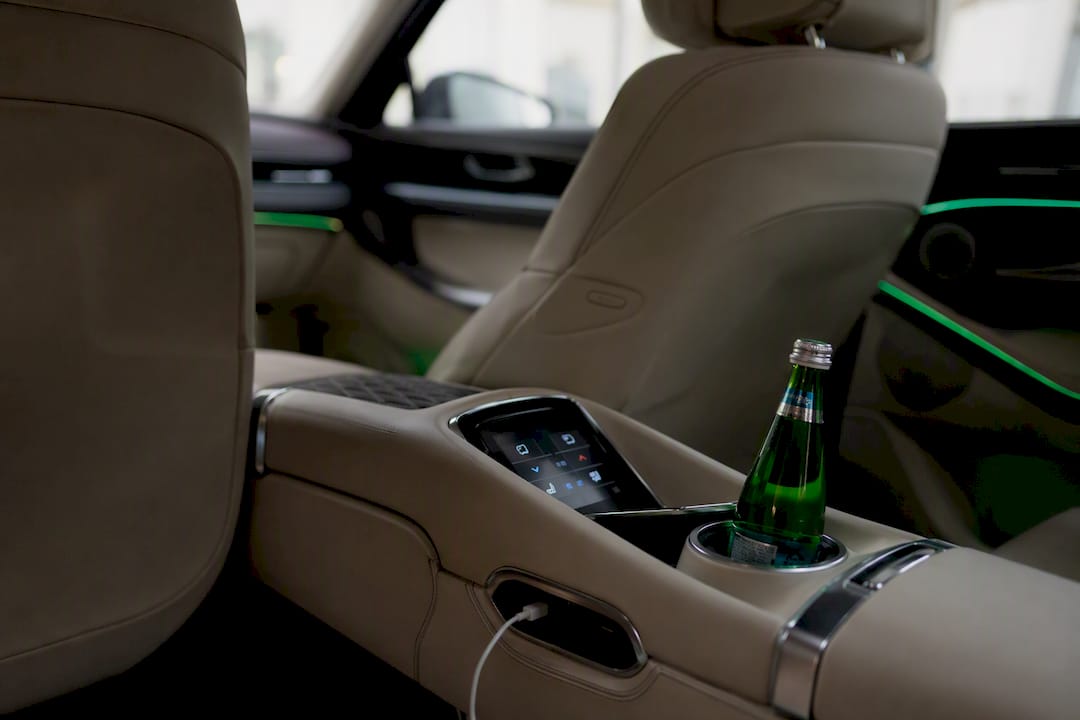
Regardless of class, certain amenities should be non-negotiable: interior cleanliness, working device chargers, bottled water, and climate control set before you get in, not after. Ask about fleet age and inspection frequency when you book. A provider that won’t answer that question directly is worth a second look.
How Does Pricing and Billing Actually Work?
Most transfers run on a fixed quoted fare agreed before the trip, not a meter running against traffic. Hourly or driver-at-disposal rates apply when you need a chauffeur to wait between stops, common for event days or multi-meeting schedules. Corporate clients typically negotiate consolidated rates with a single monthly invoice covering every trip a team takes.
What actually moves the number on your quote: vehicle class, distance and estimated drive time, whether meet-and-greet or airport handling is included, waiting time beyond what’s built into the fare, peak dates around major events, added stops, and parking or toll costs. Corporate accounts with consolidated invoicing cut a lot of this friction out for companies booking frequently.
- Vehicle class and passenger count
- Distance, drive time, and route complexity
- Waiting time beyond the included allowance
- Peak-date surcharges around major events
Pro Tip: Before you accept a quote, ask three specific questions: what’s the waiting-time policy before extra charges kick in, does the price include parking and tolls, and what’s the cancellation fee. Providers with nothing to hide answer all three without hesitation.
How Does Flight Tracking Change Your Airport Pickup?
Flight tracking is what separates a reliable airport transfer from a guessing game. The system watches your flight in real time and adjusts the chauffeur’s arrival to match, whether you land early or three hours late. Meet-and-greet with a complimentary waiting window is standard practice specifically to absorb these delays without extra charges kicking in immediately.
Meet-and-greet comes in two forms. Curbside pickup works fine for solo travelers who know the airport. An arrivals hall greeter holding a name sign matters more for hosted guests or anyone juggling heavy luggage, since it removes the friction of finding the right exit in an unfamiliar terminal.
- Real-time flight monitoring adjusts pickup timing automatically
- Complimentary waiting windows absorb reasonable delays
- Baggage assistance is standard once you clear the terminal
What Vetting and Safety Standards Should You Verify?
Reputable providers run background checks, screen driving records, and often require periodic drug testing on top of standard licensing. Enhanced vetting beyond minimum requirements is a real differentiator between a chauffeur company and someone driving a nice car for hire.

Training covers more than defensive driving. Executive protocol, privacy discretion, and in some cases basic first-aid are part of the package. Before booking, confirm the provider carries adequate commercial insurance and check the corporate account contract terms if you’re booking for a company. Both are legitimate questions, and a provider that dodges them is telling you something.
What Happens on the Day of Your Ride?
Chauffeurs typically arrive within a set window before pickup time and position the vehicle for easy boarding, curbside or at a designated arrivals point depending on the meet-and-greet arrangement you chose. During the ride, conversation follows your lead. Most executives use the time to work, and a good chauffeur reads that immediately and stays quiet.
Itinerary changes mid-trip, an extra stop, a moved meeting, get handled through a quick call to the operations desk rather than a negotiation with the driver. After drop-off, receipts and corporate invoicing generate automatically, and any preferences you mentioned, temperature, route, conversation level, get logged for the next booking.
- Arrival window confirmed shortly before pickup
- In-ride changes routed through operations, not improvised
- Preferences saved to your account for future trips
What Are Typical Cancellation and No-Show Policies?
Cancellation windows vary by booking type. Transfers usually allow free cancellation up to a set number of hours out, while hourly bookings sometimes carry stricter terms given driver scheduling. No-show fees apply once the waiting-time allowance expires without contact. When flights get diverted or meetings run long, operations desks handle the adjustment directly, provided you actually tell them what changed.
- Fixed cancellation windows differ between transfers and hourly bookings
- Waiting-time allowances determine when no-show charges apply
- Communicating changes early avoids most contingency fees
How Do You Choose the Right Provider?
Run through this checklist before committing to any provider:
- Confirm the booking model: pre-arranged with guaranteed vehicle assignment, not on-demand dispatch.
- Check available booking channels: app, phone, and direct account management for corporate use.
- Verify flight tracking is standard, not an optional add-on.
- Ask about corporate billing: consolidated invoices, authorized traveler lists, reporting access.
- Confirm insurance coverage levels and commercial licensing.
- Review fleet quality: vehicle age, inspection frequency, cleanliness standards.
- Ask directly about driver vetting: background checks, driving record screening.
When you’re actually requesting a quote, ask about the waiting-time policy, any meet-and-greet fee, how far in advance you’ll get confirmation, and whether corporate accounts get itemized monthly invoices.
Watch for these red flags:
- No mention of flight tracking for airport bookings
- Vague or unwritten cancellation policy
- No information available about driver background checks
- Inconsistent vehicle standards between quote and what shows up
How a modern provider like Zont puts this all together
Zont Cab runs the model described throughout this guide: real-time flight tracking, meet-and-greet as standard rather than an upsell, fixed transparent pricing with no hidden fees, and a premium fleet covering many cities across Europe. Corporate clients get consolidated billing and account management built for repeat bookings.
- Flight tracking adjusts pickup timing automatically on every airport transfer
- Fixed pricing is quoted upfront, with no surge or last-minute changes
- Coverage spans 120+ European cities under one consistent service standard
Pro Tip: If your company books travel regularly, set up a corporate account and request preferred-chauffeur assignments for your most frequent travelers. It turns a one-off booking into a repeatable, reportable travel program.
When Is an Executive Chauffeur Actually Worth It?
The math changes depending on what’s at stake. A roadshow with five city stops in three days, a hosted client arriving for a first meeting, a tight connection between a delayed flight and a board presentation: these are scenarios where the fixed price and the flight tracking pay for themselves in avoided chaos. Business travelers consistently cite punctuality and the ability to work during the ride as the deciding factors over rideshare.
A quick grocery run or a solo trip across town with zero time pressure doesn’t need any of this. Rideshare is fine there.
Book an Executive Chauffeur With Zont Cab
Zont Cab handles the exact process outlined above, from flight tracking through fixed pricing, across more than 120 European cities. There’s no surge pricing to worry about and no ambiguity about what’s included: meet-and-greet, a maintained premium fleet, and a chauffeur assigned before you ever land.
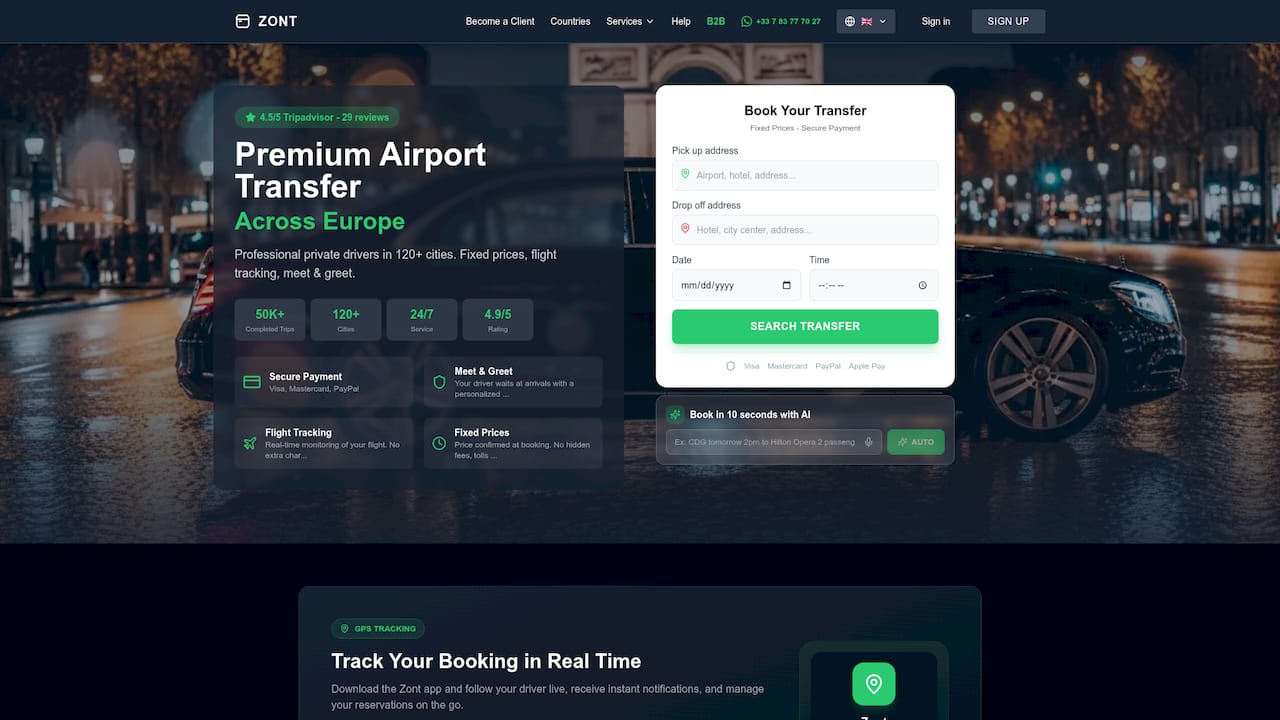
Corporate travelers get consolidated invoicing and account management through the corporate chauffeur program, which removes the receipt chasing that usually comes with expensing individual rides. Event planners and concierge teams booking multiple guests can review dedicated options through the concierge services page. If your trip involves a longer stay or several stops in one day, the driver-at-disposal option covers that at a fixed hourly rate rather than piecing together separate bookings.
Check pricing and availability for your next trip through Zont’s airport transfer coverage across Europe and get a fixed quote before you travel.
Sources
- How Executive Car Bookings Work - DA Executive Service
- The benefits of using a professional chauffeur service
- Chauffeur Services vs Ride Sharing (2026 Guide for Business Travelers)