Luxury Transfer vs European Rail: When to Choose Which
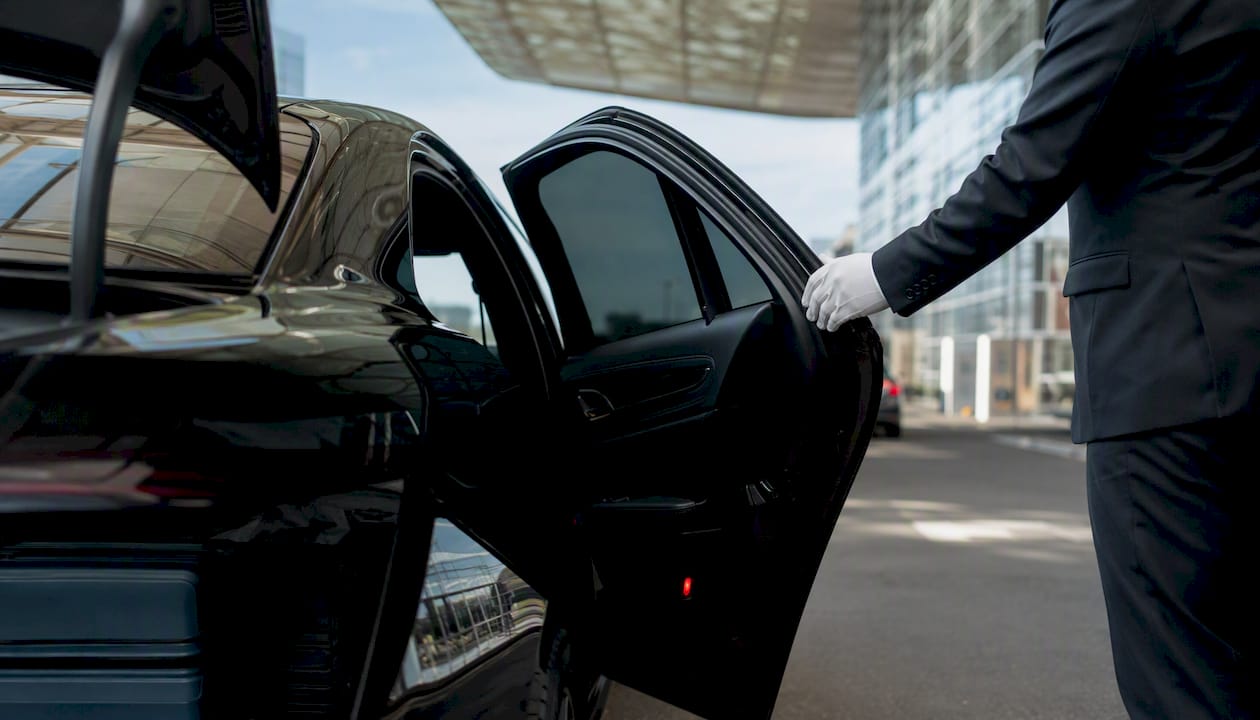
For most door-to-door trips involving luggage, groups of three or more, late-night arrivals, or complex itineraries, a pre-booked luxury private transfer beats European rail. Rail wins when you’re traveling solo or as a pair, light on bags, between two city centers connected by a fast direct service.
The decisive factors come down to five things:
- Group size: Three or more travelers often pay less per head in a fixed-price car than buying separate rail seats.
- Luggage: Heavy bags are effortless in a private vehicle; on rail, you’re hauling them through stations and up platform stairs.
- Departure time: Late-night or early-morning travel with no direct train service makes a private transfer the only reliable option.
- Corridor speed: On a direct high-speed route (Paris to Lyon on TGV, London to Paris on Eurostar), rail is genuinely fast and competitive.
- Door-to-door reality: Rail’s in-vehicle speed looks impressive until you add station access, waiting time, and the taxi ride at the other end.
Pro Tip: Before assuming rail is cheaper, divide the fixed transfer quote by your party size. For three or more travelers, the per-person cost often matches or beats advance rail fares, especially once you add luggage fees and station transfers.
Key Takeaways
For most travelers with luggage, groups of three or more, or complex itineraries, a pre-booked luxury private transfer delivers better door-to-door value than European rail, even when rail looks faster on the timetable.
| Point | Details |
|---|---|
| Run the door-to-door formula | Add access, waiting, in-vehicle, and egress time for both modes before deciding. |
| Group math favors transfers | Three or more travelers often pay less per head in a fixed-price car than buying separate rail seats. |
| Rail wins on fast direct corridors | TGV, Eurostar, and similar high-speed direct services are genuinely competitive for solo or paired travelers with light bags. |
| Luxury rail is an experience, not just transport | Scenic and sleeper trains earn their place when the journey itself is the goal, not just the destination. |
| Zont Cab covers both halves | Fixed-price transfers with flight tracking across 120+ European cities handle the legs where rail falls short. |
Table of Contents
- How do luxury private transfers and European rail actually compare?
- Which option wins for your specific trip type?
- How do you compare the real cost of each option?
- How do you calculate total door-to-door travel time?
- What does luxury rail actually offer, and when does it win?
- What should you check before booking either option?
- How pre-booked transfer features remove travel friction
- The case for combining both modes
- Zont Cab makes the transfer half of that equation simple
- Sources
How do luxury private transfers and European rail actually compare?
The honest answer is that neither mode wins across the board. The right choice depends on which dimension matters most to you on a specific trip. Here’s how they stack up across the factors that actually move the needle.
| Dimension | Luxury private transfer | European rail |
|---|---|---|
| Door-to-door total time | High (no station access, no transfers) | Medium (fast in-vehicle, but station access adds time) |
| Price predictability | High (fixed quote, no surprises) | Medium (advance fares are cheap; flexible tickets are expensive) |
| Comfort and privacy | High (your vehicle, your schedule) | Medium to High (first class is good; shared space is the trade-off) |
| Luggage handling | High (driver loads and unloads) | Low to Medium (self-managed through stations) |
| Flexibility and spontaneity | High (route changes, stops, pickups) | Low (fixed timetable, seat reservations) |
| Frequency and availability | Medium (pre-book required; flexible timing) | High (multiple departures daily on major routes) |
| Environmental footprint (CO2) | Low to Medium (depends on vehicle and occupancy) | High (rail is significantly lower per passenger) |
| Safety and reliability | High (flight tracking, fixed driver) | Medium (delays and cancellations affect all operators) |
| Group suitability | High (one vehicle, one price) | Low to Medium (multiple seats, multiple tickets) |
Total travel time is where most travelers get the comparison wrong. Rail timetables show seat-to-seat speed, not door-to-door time. A 2023 EU analysis found that only a small minority of EU routes achieve rail speeds above 150 km/h, and rail beats air on just 68 of 297 city-pair routes once out-of-vehicle time is counted. The same logic applies when comparing rail to a private transfer: station access, boarding queues, and the taxi at the far end can easily add 60–90 minutes to a journey that looks fast on paper.
Price predictability cuts sharply in favor of private transfers for anyone who hates surprises. A fixed quote from a reputable operator is exactly what you pay. Rail fares on SNCF, Eurostar, and Eurail passes vary wildly based on how far in advance you book, whether you need flexibility, and whether your route requires a seat reservation on top of the pass. Advance rail fares can be genuinely cheap; last-minute or flexible tickets often are not.
Luggage handling is a quiet but real differentiator. Private transfers offer door-to-door convenience and luggage handling that rail simply cannot match, especially for families traveling with strollers, ski equipment, or multiple checked bags. On rail, every bag is your problem from the moment you leave the taxi to the moment you reach your seat.

CO2 is the one dimension where rail wins clearly and without qualification. Rail is substantially lower in emissions per passenger than a private car, and that gap matters if your travel decisions account for environmental impact.
Which option wins for your specific trip type?
Distance and itinerary shape the answer more than anything else. Here are the scenarios where the choice becomes clear.
- Airport pickup with heavy luggage: Private transfer wins every time. A chauffeur meets you at arrivals, handles the bags, and drives directly to your hotel. No platform changes, no luggage racks, no hunting for a taxi rank.
- Solo traveler, city center to city center, direct TGV or Eurostar: Rail wins. Paris to Lyon in under two hours on a TGV, or London to Paris on Eurostar, is hard to beat for a single traveler with a carry-on. Book via Trainline for competitive advance fares.
- Group of four, 200 km intercity leg: Price a fixed transfer quote first. At this distance, a single car often costs less per person than four rail seats, and you travel together with no luggage stress.
- Late-night or early-morning arrival: Private transfer wins. Trains stop running; a pre-booked chauffeur does not.
- Family with young children: Private transfer wins. Car seats, flexible stops, and no platform sprints with a stroller make the choice obvious.
- 150–450 km intercity leg, two travelers, direct high-speed service: Rail is usually faster and cheaper. This is the sweet spot for Eurail pass holders or anyone booking advance SNCF fares.
- Multi-stop itinerary or rural destination: Private transfer wins. Rail coverage thins dramatically outside major corridors, and private vehicles enable flexible routing where no direct train exists.
- Cross-border trip within Schengen: Either can work, but a private transfer handles cross-border logistics without timetable constraints or border-crossing delays that occasionally affect international rail.
For distances under 150 km, a private transfer is almost always faster door-to-door unless the train station is literally adjacent to both your origin and destination. Above 450 km, a direct high-speed rail service (where it exists) starts to compete seriously on time, though the luggage and group-size math still favors a transfer for larger parties.
How do you compare the real cost of each option?
The most common mistake is comparing a rail fare to a transfer quote without accounting for the full picture on both sides.
For a private transfer, the math is straightforward: one fixed price for the vehicle, divided by the number of passengers. Typically, the per-person cost can be comparable to advance rail tickets on the same route, but add luggage fees, a taxi at the far end, and the time cost of navigating a busy station, and the gap narrows fast. Marketplace data suggests typical per-car quotes settle around certain price bands for 150–200 km, 200–300 km, and 300–450 km legs. These are illustrative bands, not guarantees, but they give you a working baseline for the group math.
For rail, the booking platform matters. Trainline aggregates fares across operators and often surfaces the cheapest advance options. SNCF’s own site is the authoritative source for French domestic and TGV fares. Eurostar has its own booking flow for the London-Paris-Brussels corridor. Eurail passes make sense if you’re covering multiple countries over several weeks, but for a single intercity leg, a point-to-point ticket is almost always cheaper.
A few booking rules worth following:
- Lock in a fixed transfer quote in writing before the trip. A verbal estimate or metered quote is not the same thing.
- Buy advance rail tickets as early as possible. SNCF and Eurostar release their cheapest fares months ahead; prices climb as the departure date approaches.
- Check what the rail fare actually includes. Some Eurail pass routes require a mandatory seat reservation fee on top of the pass, which adds cost and complexity.
- Factor in the last mile on both ends. If the station is 30 minutes from your hotel by taxi, add that cost and time to the rail total.
- For groups of three or more, always run the per-person transfer math before assuming rail is cheaper.
Pro Tip: Experienced travel writers recommend pricing both options door-to-door before deciding. The rail fare alone is rarely the full story.
How do you calculate total door-to-door travel time?
The formula most travelers skip is simple: access time + waiting and boarding + in-vehicle time + egress time + buffer for connections = total journey time. Run it for both modes before you decide.
Here’s how it plays out on two real-distance examples.
Example 1: 200 km mid-distance route (e.g., Paris to a regional city)
Example 2: 320 km route requiring one rail transfer
The EU analysis cited earlier makes the same point at scale: out-of-vehicle components (access, waiting, transfers) are what erode rail’s in-vehicle speed advantage on many routes. On corridors where high-speed rail exists and stations sit close to city centers, the gap shrinks. On routes with one or more forced connections, the transfer penalty compounds quickly.
Use Google Maps to check actual station-to-hotel and airport-to-hotel access times for your specific trip. The difference between a central station and a peripheral airport can be 40 minutes each way, which changes the entire comparison.
What does luxury rail actually offer, and when does it win?
Luxury rail is a different product from efficient rail. Conflating the two leads to bad decisions in both directions.
First-class seating on TGV or Eurostar gives you wider seats, a quieter car, and often a meal service. It’s comfortable and worth the premium for a solo business traveler who wants to work en route. But it’s still a shared carriage, and your luggage is still your problem.
The genuinely distinctive rail experiences sit in a separate category:
- Private compartments and sleeper trains: Night trains across Europe (the Nightjet network, for example) let you board in one city and wake up in another. For long overnight legs, this can be more restful than any hotel transfer combination.
- Scenic and heritage trains: Routes like the Glacier Express in Switzerland or the Bernina Express exist primarily as experiences. Luxury rail on these routes delivers panoramic windows, curated onboard service, and scenery that no car can replicate. When the journey itself is the point, these trains are the right answer regardless of door-to-door time.
- First-class long-distance services: On routes like Paris to Barcelona or Amsterdam to Berlin, first-class rail combines reasonable speed with a genuinely pleasant onboard environment.
The honest comparison: a private chauffeur gives you more privacy, door-to-door convenience, and total control over timing. A luxury rail experience gives you scenery, a sense of occasion, and freedom from driving. They’re solving different problems. If you want to arrive refreshed and on schedule, a private transfer is the cleaner answer. If you want the journey to be part of the trip, luxury rail earns its place.
What should you check before booking either option?
A checklist prevents the most common booking mistakes on both sides.
For a private transfer, confirm:
- Is the price fixed, or is it an estimate that could change?
- Does the driver track your flight and adjust automatically if it’s delayed?
- Is there a meet and greet service at arrivals, with a name board?
- What vehicle class is confirmed, and does it fit your luggage and party size?
- What is the cancellation and refund policy in writing?
- Is the driver licensed and the operator properly registered?
For rail, confirm:
- Is the service direct, or does it require a connection?
- If using a Eurail pass, is a mandatory seat reservation required (and what does it cost)?
- Are seats reserved, or is it open seating?
- What is the refund policy if the train is canceled or significantly delayed?
- Is there a luggage size or quantity limit on this specific service?
Red flags for transfers: A metered or “approximate” quote, no confirmation of driver details before travel, no flight-tracking capability, and no written cancellation terms. Licensed private transfer operators provide all of this upfront.
Red flags for rail: Multiple forced connections with tight layovers (under 20 minutes), departure times that require a 4 AM station arrival, and no seat reservation on a route known for high occupancy.
How pre-booked transfer features remove travel friction
The gap between a good private transfer and a mediocre one comes down to a handful of operational features that either prevent problems or don’t.
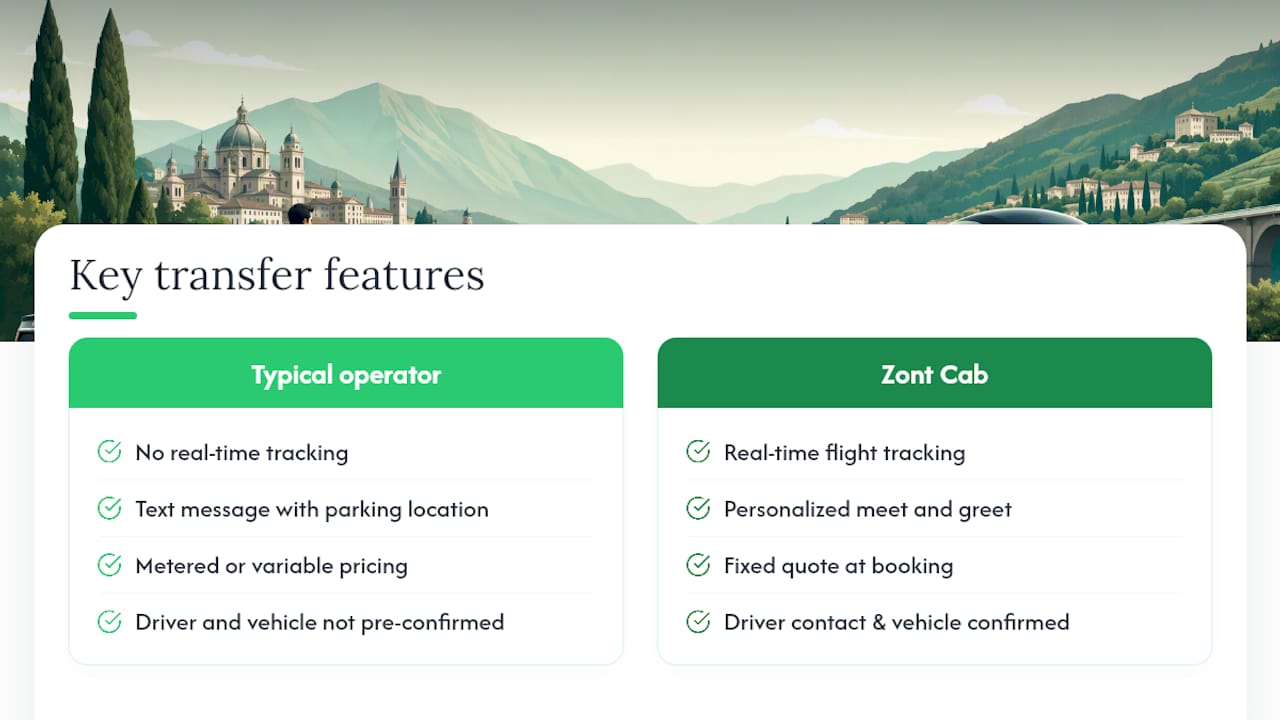
Flight tracking is the most important. When a flight is delayed, a driver without tracking either shows up on time and leaves, or waits and charges you for it. A driver with real-time flight monitoring adjusts automatically, no phone calls required.
Meet and greet at arrivals means a named driver holding a board at the exit, not a text message with a parking lot location. For travelers arriving in an unfamiliar city after a long flight, that distinction matters more than it sounds.
Fixed pricing removes the anxiety of a long motorway run on a meter. You know the number before you get in the car.
Zont Cab operates across 120+ European cities with all three of these features built into every booking: flight tracking, personalized meet and greet, and a fixed quote confirmed at the time of booking. The fleet runs Mercedes, BMW, and minivan options for families or groups. With over 50,000 completed trips and a 4.5-star TripAdvisor average, the operational track record is verifiable, not just claimed. Executive airport transfers through Zont Cab include driver contact details and vehicle confirmation sent before travel, so you know exactly what’s arriving and when.
When you book, request the booking confirmation showing the fixed price, driver name, vehicle class, and flight-tracking confirmation. Any reputable operator provides this without hesitation.
The case for combining both modes
The sharpest travel writers and transfer specialists agree on one thing: the best European itineraries often use both modes deliberately, not one to the exclusion of the other.
The pattern that works best for most luxury travelers is rail for the fast hub-to-hub leg, and a private transfer for the first and last mile. Take Eurostar from London to Paris, then a Zont Cab transfer from Gare du Nord to your hotel. Or TGV from Paris to Lyon, then a private car to a countryside property with no train station nearby. Hybrid itineraries capture rail’s speed advantage on the corridors where it genuinely exists, while eliminating the luggage-hauling, station-navigation, and last-mile uncertainty that make pure rail travel exhausting with heavy bags or a family in tow.
The travelers who get this wrong are the ones who pick a mode and apply it rigidly. Rail purists end up in taxis at midnight because the last train left at 10 PM. Transfer-only travelers pay more than necessary on routes where a direct high-speed service would have been faster and cheaper. The answer is almost always a combination, calibrated to the specific leg.
Zont Cab makes the transfer half of that equation simple
When the transfer is the right call, the quality of the operator determines whether the experience is genuinely luxurious or just a car ride. Zont Cab’s fixed-price model means the quote you receive is the price you pay, with no meter running and no surge pricing at 11 PM.
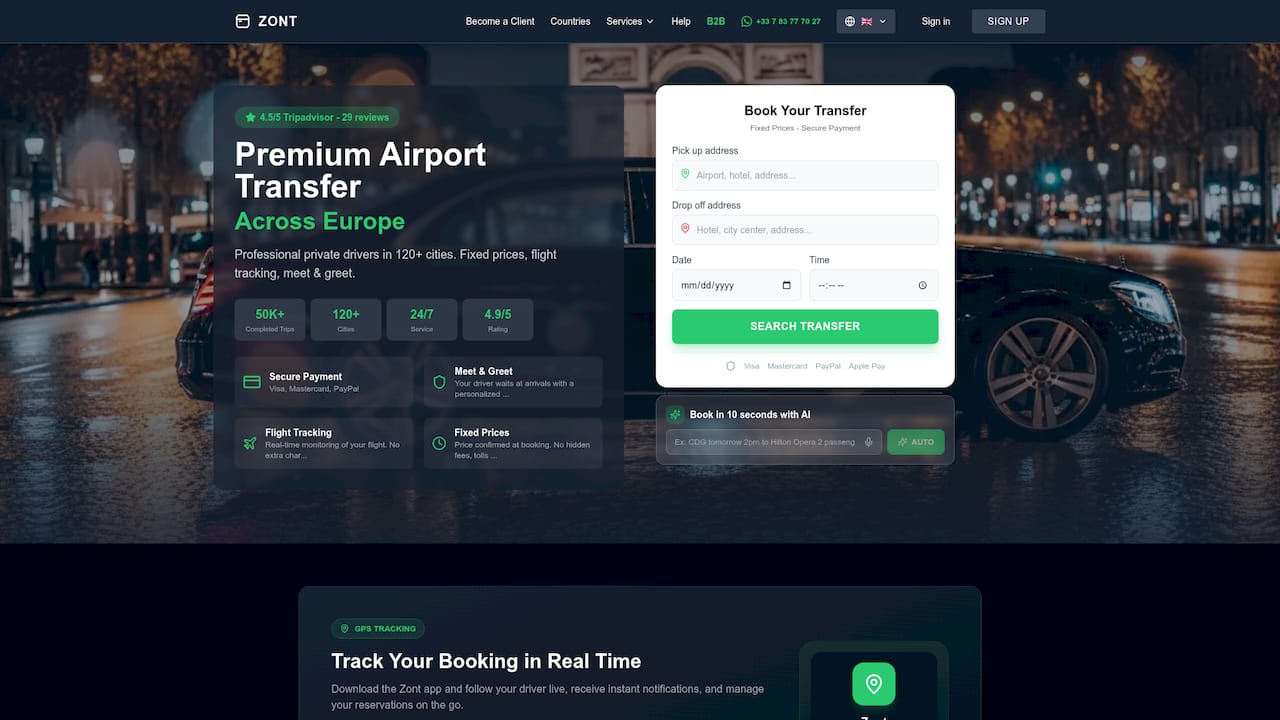
Every booking includes flight tracking, a meet and greet at arrivals, and a confirmed vehicle from a premium fleet (Mercedes E-Class, S-Class, BMW, or Mercedes V-Class for groups). Coverage spans 120+ European cities, from major airport hubs to regional destinations that rail doesn’t reach. The booking process takes a few minutes online; you receive driver details and a fixed confirmation before you travel.
For families, groups, or anyone arriving with real luggage, book your European transfer with Zont Cab and skip the station math entirely.
Sources
- How fast are rail trips between EU cities and is rail faster than air?
- Rent a Car or Take the Train?
- Private vs Public Transport Europe: Which Is Better for Travelers?
- Switzerland by Car vs Train: The Definitive 2026 Comparison for Luxury Travellers | Swiss Epic Tours