Avoid Missed Pickups at CDG: How to Reach 2G, Use CDGVAL, and Prebook
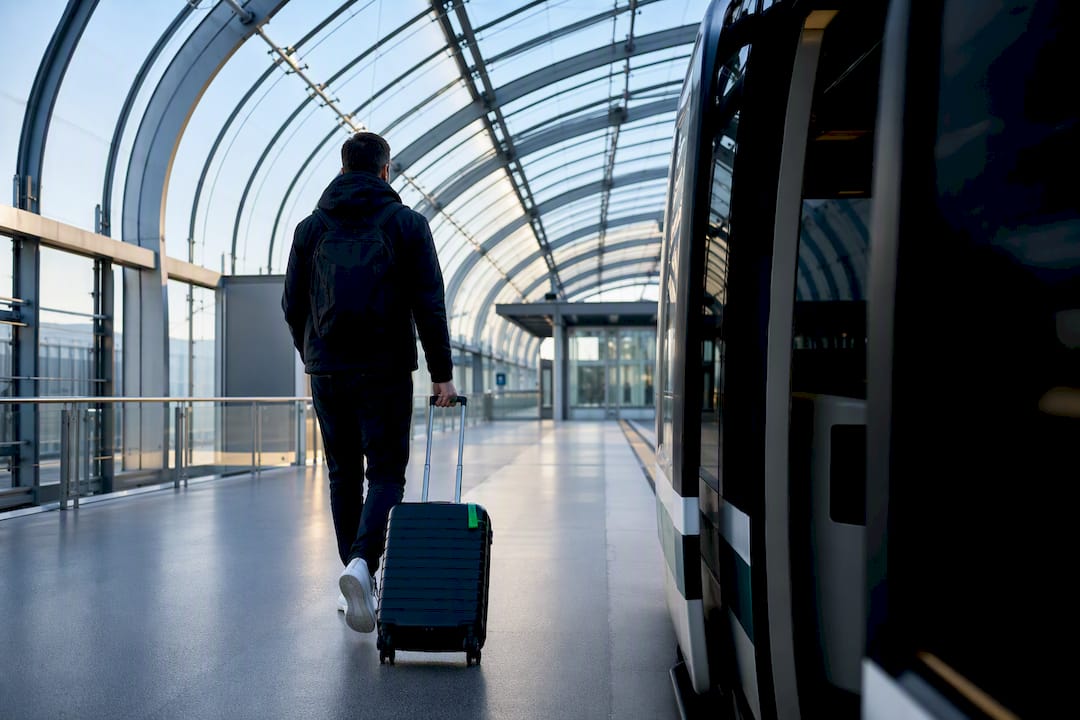
Go straight to the arrivals curb outside your terminal, or the exact spot your driver named, and confirm the driver by name and vehicle before you get in. Have your flight number and booking reference ready. If your arrival hall and pickup point sit in different parts of Terminal 2, follow CDGVAL, the N2 shuttle, or LISA directions your provider sends you. Build in extra time. Sub-terminal walking distances and possible border re-screening at CDG eat minutes fast.
TL;DR:
- Knowing your specific terminal hall letter (2A to 2G) before landing allows direct access to the correct pickup curb and avoids confusion.
- Terminal 2G requires a separate shuttle bus from 2F, and drivers need the exact shuttle drop point coordinated in advance, not curbside.
- Using the CDGVAL shuttle linked to your arrival hall is the fastest way to move landside between terminals, especially when carrying checked luggage or traveling with kids.
- Building in at least 40 minutes for border control, transfers between terminals, and walking distances prevents missing tight connections at CDG.
- Pre-booked services like Zont automatically track your flight and adjust pickup times, offering fixed pricing with no surprises, unlike self-arranged shuttles or public transport.
Table of Contents
- Pickup Checklist and Meeting Points by Terminal
- Moving Between CDG Terminals: CDGVAL, Shuttles, and LISA
- How to Get Help at CDG: Assistance, Mobility Support, and Contacts
- How Much Time to Buffer for CDG Transfers and Pickups
- Why Terminal 2’s Layout Makes Managed Pickup Worth It
- Book Your Zont Pickup at CDG Before You Land
- Official Maps and Contacts for CDG Pickups
- Sources
- FAQ
Pickup Checklist and Meeting Points by Terminal
CDG splits pickups into four distinct zones, and knowing which one applies to your flight saves real time. The terminal code on your boarding pass, not the airline name, tells you where to go.
Terminal 1 is compact by CDG standards. Arriving passengers exit near a single curb, and walking distances from baggage claim to the pickup zone stay short. If you need to reach Terminal 2 or 3 afterward, the CDGVAL shuttle connects all three from a stop just outside.
Terminal 2 is where most confusion happens, because it isn’t one building. It’s a scattered complex of halls labeled 2A through 2G, and your ticket, not your gut, tells you which one you land in. Drivers typically wait at the arrivals curb tied to your specific hall, so telling your provider “Terminal 2” without the letter is like telling a New York cab “meet me at the airport.” A few things to flag before you land:
- Check your boarding pass or airline app for the hall letter (2A, 2B, 2C, 2D, 2E, 2F, or 2G) well before touchdown.
- Halls 2E and 2F connect through an airside walkway, but that route includes transfer immigration and a security check, so it’s not a shortcut for landside pickups.
- 2C and 2D share a walking corridor at ground level and are among the easier halls to navigate on foot.
- Share your exact hall letter with your driver the moment you land, not after you clear customs.
Terminal 2G deserves its own mention because it behaves nothing like the rest of Terminal 2. It’s a remote satellite building reachable only by the N2 shuttle bus, which departs from 2F. There’s no walking route and no direct curb access from the main terminal complex, so drivers meeting 2G arrivals need to coordinate the exact shuttle drop point in advance, not guess at it curbside.
Terminal 3 runs a simple, single curb pickup near the Roissypôle transit hub, similar in scale to Terminal 1. If your onward plans involve Terminal 2, the CDGVAL shuttle stops right there too, making it one of the easier terminals to transfer through.
Moving Between CDG Terminals: CDGVAL, Shuttles, and LISA
CDG runs three separate people-mover systems, and mixing them up is the single most common reason travelers miss their pickup window. Each one serves a different purpose, and only one of them works for a driver meeting you landside.
- CDGVAL is the free-automated shuttle linking Terminals 1, 2, and 3, along with the parking areas and Roissypôle. It’s the fastest way to move landside across the airport, and it’s what your driver will point you toward if your arrival hall differs from your pickup point.
- The N2 shuttle bus is the only way to reach Terminal 2G. It boards at 2F and requires a short bus ride, not a walk, so build that leg into your timing if 2G is your arrival hall.
- LISA, the airside people-mover inside Terminal 2E, connects halls K, L, and M for passengers who haven’t yet cleared border control. It’s useful for airside connections, but it cannot get you to a landside pickup curb, since stepping off LISA still leaves you inside the secure zone.
CDGVAL runs roughly every four minutes during operating hours, which makes it the default choice whenever your provider tells you to switch terminals before meeting them. Walking makes sense only for short intra-hall moves, like the 2C to 2D corridor. Anything that spans separate halls or separate terminals is faster and less stressful by shuttle, especially if you’re hauling checked bags or traveling with kids.
How to Get Help at CDG: Assistance, Mobility Support, and Contacts
Official help at CDG comes through a few clear channels, and knowing which one to use before you land saves you from wandering a terminal looking for a desk. Airline transfer desks handle rebooking and connection issues, with Air France maintaining a staffed presence near the 2E to 2F transfer node specifically because that connection is so common. Airport information desks sit at major nodes throughout Terminals 1, 2, and 3 for general wayfinding and lost luggage support.
For mobility assistance or a meet-and-greet service, book ahead rather than arranging it on arrival. Providers need your flight number, arrival hall, the type of mobility support required, and your estimated arrival time, and most ask for that information at least 48 hours out to guarantee coverage.
- Confirm your arrival hall letter before contacting any assistance service, since 2A and 2G require completely different logistics.
- If your itinerary crosses from a non-Schengen flight to a Schengen one (or the reverse), expect a passport check and possibly a PARAFE e-gate, which adds unpredictable time to any assistance request.
- Keep your phone charged and reachable by SMS. Flight-tracking based coordination only works if your driver can actually text you when you land.
Pro Tip: Save your provider’s local contact number in your phone before you board, not after you land. CDG’s cell coverage inside some Terminal 2 halls is spotty enough that switching to SMS instead of calling gets a faster response.
For anything involving taxi ranks specifically, the Paris taxi guidance from the Préfecture de Police lays out the rules around regulated curbside pickups, which is worth knowing if you’re comparing a metered taxi to a pre-booked private car.
How Much Time to Buffer for CDG Transfers and Pickups
CDG’s layout punishes tight connections more than most European hubs, and the reason is structural: terminal distances and variable border-control waits turn what looks like a short connection on paper into a 40-minute ordeal in practice. Build these buffers into your plan rather than trusting the airline’s minimum connection time:
- Non-Schengen arrival to a European onward flight: add extra time beyond the posted minimum for passport control, which can back up unpredictably during peak hours.
- Within Terminal 2 sub-halls (like 2E to 2F): budget time for the airside walkway plus the transfer security screening, since that checkpoint doesn’t move at a predictable pace.
- Terminal 1 to Terminal 2, or Terminal 2 to Terminal 3: factor in the CDGVAL ride itself plus walking time at both ends, even though the shuttle runs frequently.
Summer holidays and afternoon peak hours push these numbers higher, and checked baggage adds another layer of uncertainty if your connection is tight. This is exactly the scenario where a pre-booked meet-and-greet earns its keep over a self-transfer plan: a driver tracking your flight absorbs a delay automatically, while a self-arranged connection through public shuttles has no such cushion.
Why Terminal 2’s Layout Makes Managed Pickup Worth It
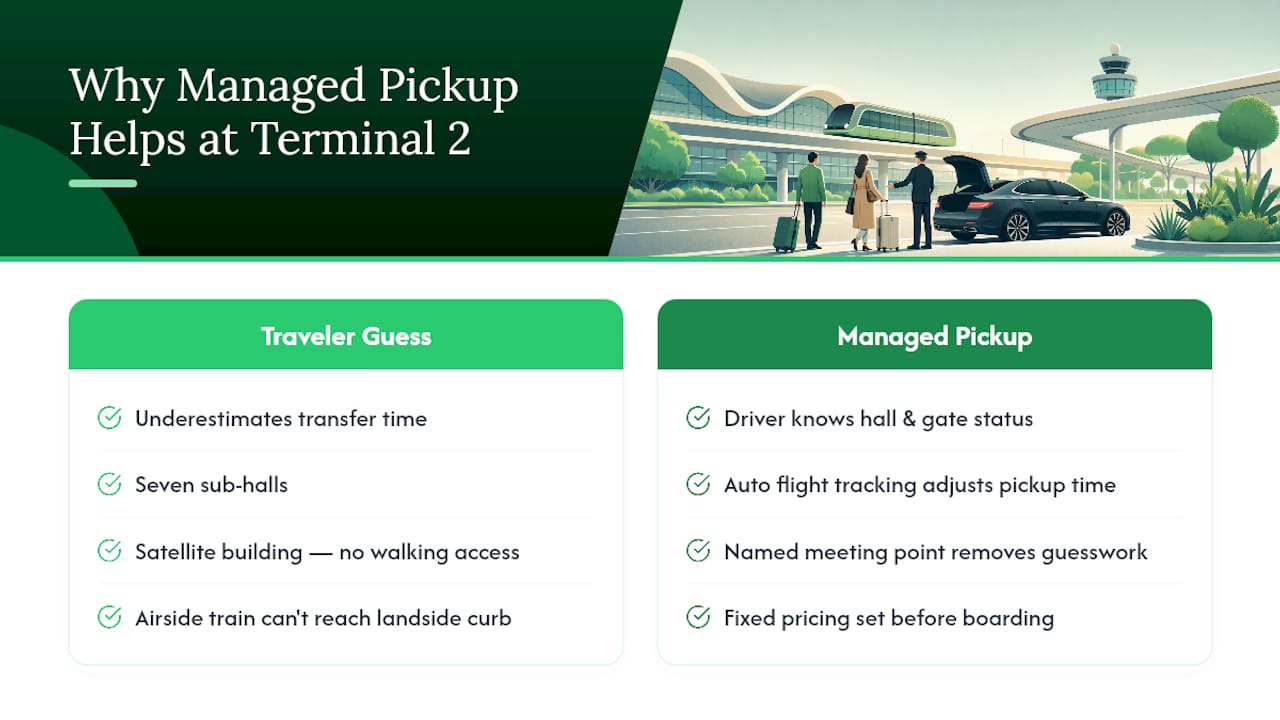
CDG’s design is the reason so many travelers underestimate their own transfer time. Nobody expects a single terminal to have seven sub-halls, a satellite building with no walking access, and an airside train that can’t reach a landside curb. That complexity is exactly why a service built around flight tracking and a named meeting point removes most of the guesswork.
Zont tracks your flight automatically and adjusts the pickup time if you land early or late, then meets you with fixed pricing set before you ever board. Its premium vehicles, including the Mercedes Classe E, are options for travelers who want a straightforward, professional pickup instead of navigating shuttle timetables on no sleep. Across more than 50,000 completed trips, the pattern holds: a driver who already knows your hall letter and gate status handles Terminal 2’s sprawl better than a traveler guessing at it for the first time.
— Arthur
Book Your Zont Pickup at CDG Before You Land
Booking takes a few minutes: share your flight number and arrival hall when you reserve, and Zont handles the rest, tracking your flight so the pickup time adjusts automatically if you’re early or delayed.
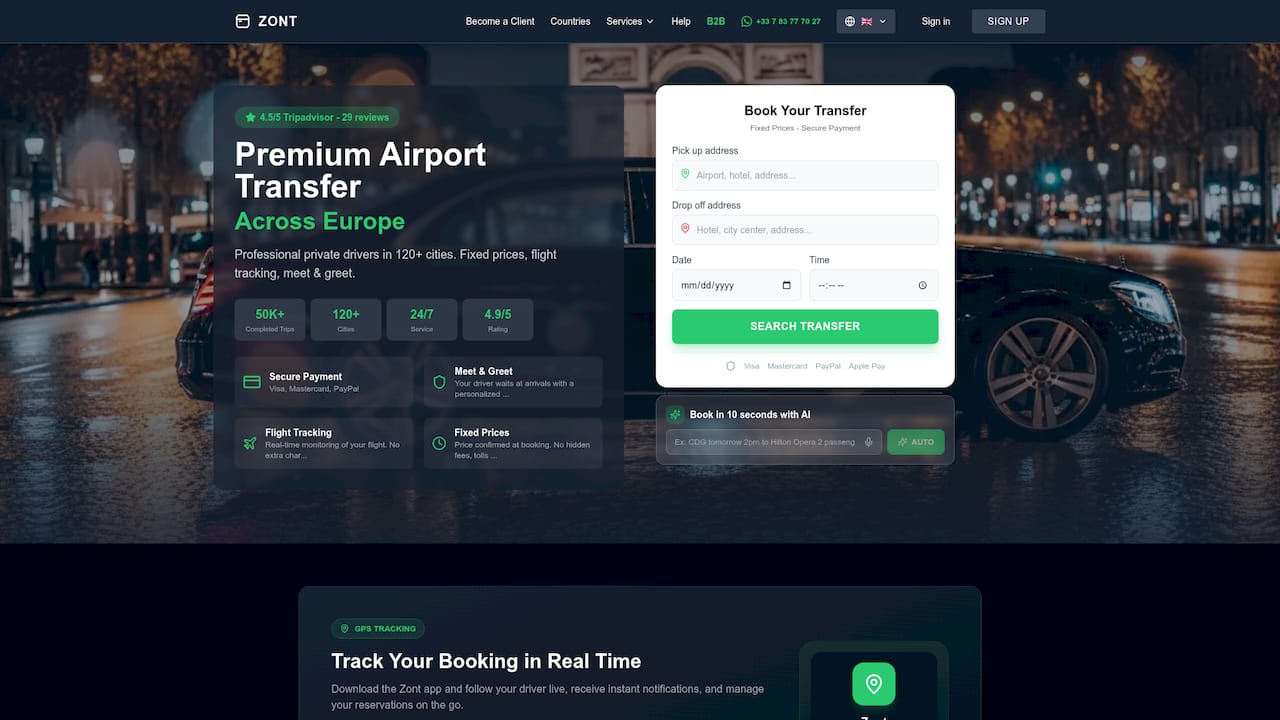
At the curb, your driver identifies themselves by name and holds a sign with yours, so there’s no guessing among a crowd of drivers. Pricing is fixed at booking, with no surprise fees added after your ride ends, and vehicle options run from standard sedans to larger vehicles for families or groups needing more luggage space. If your flight gets delayed, the driver already knows, because flight tracking updates in real time rather than relying on you to send a message from a jetway with no signal. That’s the difference between hoping a pickup works out and knowing it will. To lock in a fixed-price, pre-booked pickup for your next arrival, visit Zont’s airport transfer page for Europe and enter your flight details.
Official Maps and Contacts for CDG Pickups
- CDGVAL schedules and stops: check shuttle frequency and operating hours before planning an early or late transfer.
- Charles de Gaulle terminal map: locate your exact hall and the connectors between 2E and 2F.
- Paris taxi guidance: official rules on regulated curbside taxi pickups in Paris.
- Ground transport resources: general reference on how professional transfer services structure pickups.
Sources
- CDGVAL: map, schedules | Bonjour RATP
- Charles de Gaulle International Airport Map (All-Maps)
- Self Transfer at Paris CDG: Terminal Guide and Timing | LayoverGuard
- Préfecture de Police — Paris taxi guidance
FAQ
How do I request assistance at the airport?
Contact the airline’s transfer desk for your terminal or an airport information desk at major nodes in Terminals 1, 2, and 3, and provide your flight number and specific need.
How do I request special assistance at CDG specifically?
Book mobility or meet-and-greet assistance in advance, giving your flight number, arrival hall, and mobility requirements, since most services need advance notice to guarantee coverage on arrival.
Which terminal does Air France use at CDG?
Air France operates primarily out of Terminal 2, spread across halls 2E, 2F, and 2G, with a staffed presence near the 2E to 2F transfer connector for passengers changing flights.
How do I contact Charles de Gaulle Airport?
Use the airport’s official information desks located throughout Terminals 1, 2, and 3, or check the CDGVAL page for shuttle-related contact details tied to terminal transfers.
What’s the fastest way to get picked up at CDG Terminal 2?
Confirm your exact hall letter (2A through 2G) before landing, then go directly to that hall’s arrivals curb where your driver, like a pre-booked Zont chauffeur, will be waiting with your name.