Taxis in Spain: How to Ride, Save, and Stay Safe

For short trips inside a city, hail an official taxi or grab one from a rank. For airports, early flights, or anything with kids and luggage, pre-book a fixed-price transfer instead. That’s the whole decision tree, and almost every bad taxi experience in Spain traces back to ignoring it.
Fares run on a meter with clear rules, but supplements for nights, holidays, and airport pickups can push a short ride’s price up more than travelers expect. Regional rules also differ enough that what’s normal in Madrid isn’t always normal in Barcelona or the Balearic Islands, especially around ride-hailing apps and vehicle authorization. Pre-booking a transfer removes that guesswork entirely: you know the price before you land, and someone is waiting with a sign instead of you hunting for a car outside a terminal at midnight.
Before your next ride, run through this:
- Short city trip, daytime: hail a taxi or walk to a rank. It’s fastest and cheapest.
- Airport, early departure, or a group with bags: pre-book a fixed-price transfer the night before, minimum.
- Unsure if a car is legitimate: check for the roof light, visible license plate/number, and a running meter before you get in.
Key Takeaways
Reliable taxi travel in Spain comes down to matching the method to the trip: hail or rank for short city rides, apps for mid-distance trips with price certainty, and a pre-booked fixed-price transfer for airports, families, or anything on a tight schedule.
| Point | Details |
|---|---|
| Default to street taxis in cities | Fastest and cheapest for short daytime trips in major urban centers. |
| Check the meter and license | Confirm the meter runs or agree a fixed price, and verify the visible license number. |
| Apps work best mid-distance | Cabify, Uber, and Bolt offer price certainty but thin out fast outside major cities. |
| Watch for municipality return rules | A driver may charge for the return leg if he can’t pick up new fares in your destination town. |
| Pre-book for airports and families | Zont Cab locks in a fixed price, tracks your flight, and lets you request a child seat in advance across 120+ European cities. |
Table of Contents
- How Do You Get a Taxi in Spain?
- Which Apps Work for Taxis and Ride-Hailing in Spain?
- How Do Taxi Fares Work in Spain?
- When Should You Pre-Book an Airport Transfer?
- What Should You Know About Taxi Licensing and VTC Rules?
- What Are the Everyday Rules for Payment, Tipping, and Child Seats?
- What Should You Confirm Before You Get In?
- When Do I Actually Choose a Taxi Over a Pre-Booked Transfer?
- Book a Fixed-Price Transfer Instead of Guessing at the Airport
- Where to Verify Local Taxi Rules and Fares
- Sources
How Do You Get a Taxi in Spain?
You have five real options, and picking the right one depends on where you are and what time it is.
- Hail one from the street. In big cities, an illuminated green light on the roof (sometimes a “Libre” sign) means the taxi is available. This works well in central Madrid, Barcelona, Valencia, and Seville during the day and early evening.
- Walk to a taxi rank (“parada”). Ranks outside train stations, hotels, and shopping districts are the safest bet late at night, since every car in line is licensed and the queue system prevents haggling.
- Call a radio taxi dispatch. Every major city has a phone-based dispatch service. It’s the old-school method, still reliable in areas where apps have thin coverage.
- Use a ride-hailing or taxi app. Cabify, Uber, and Bolt operate in most large Spanish cities and let you see the price and driver details before confirming.
- Pre-book a private transfer. For airports, long intercity runs, or anything time-sensitive, booking ahead locks in a price and a driver who’s tracking your flight.
Before getting in any car, check three things: the roof light is lit or off correctly, the license number is visibly displayed on the door or windshield, and the meter starts running (or the driver confirms a fixed price up front). Official taxis in Madrid are identifiable by their white paint job with a red diagonal stripe, and the city runs roughly 15,000 licensed cabs, which is why Madrid’s official transport guidance is worth a quick look before you land.
One wrinkle catches a lot of visitors off guard: taxi licenses are tied to a specific municipality. If you hire a cab in one town for a trip to another, that driver typically can’t legally pick up a new fare once he drops you off, so he may charge for the return leg. It’s not a scam. It’s how the licensing system works, and it matters most for day trips outside major cities.
Pro Tip: If you’re heading somewhere off the beaten path, like a coastal town or a rural wedding venue, ask the driver upfront whether the fare includes the return trip. If it doesn’t, either negotiate a round-trip price before you leave or arrange a pickup time and pre-book it, since flagging a taxi back from a small town isn’t guaranteed.
Which Apps Work for Taxis and Ride-Hailing in Spain?
Three names dominate app-based rides in Spain: Cabify, Uber, and Bolt. All three operate in Madrid, Barcelona, Valencia, Seville, and most provincial capitals, but coverage drops off fast once you leave the big metro areas. Reporting on ride-hailing access across Spain confirms these apps are far less reliable, or simply absent, in smaller towns, rural regions, and several island destinations.
Here’s how the app-based options stack up against a traditional street taxi:
- Cabify tends to run a mixed fleet of licensed taxis and VTC (private hire) vehicles, with upfront pricing shown before you confirm.
- Uber operates similarly in Spain, using VTC-licensed cars rather than metered street taxis in most cities, with surge pricing during high-demand periods.
- Bolt covers many of the same cities as Uber and Cabify but has patchier availability outside major urban centers.
- Official taxi apps (city-specific dispatch apps) connect you to a metered, municipally licensed cab, which some travelers prefer for price predictability on short hops.
For a quick city trip, an app is convenient because you see the price before you commit. For airport pickup, an app can leave you stranded in a pickup zone during a surge, since VTC vehicles depend on driver availability the same way any ride-hailing service does. For islands or rural travel, don’t assume an app will work at all. Check coverage before you rely on one, and have a backup plan, either a rank or a pre-booked transfer.
Child-seat availability is another gap worth knowing about. Most street taxis and standard app rides don’t carry child seats by default, though children are often exempt from seat requirements on short urban trips (motorway travel is stricter). If a booster or child seat matters for your trip, a pre-booked service that lets you request one at the time of booking is the more dependable route.
How Do Taxi Fares Work in Spain?
Spanish taxis run on a metered system with a starting flag fare, then a rate per kilometer and a separate rate for waiting time in traffic. On top of that base structure, expect supplements: night rates (typically after 9 or 10 PM and on Sundays/holidays), a fixed airport supplement in cities like Madrid and Barcelona, and sometimes a small per-bag charge for luggage.
Here’s roughly what that looks like in practice:
| Fare Component | Typical Range | Notes |
|---|---|---|
| Base/flag fare (daytime) | Set at pickup, varies by city | Starts the moment the meter engages |
| Per-kilometer rate | Varies by city and time of day | Higher at night and on holidays |
| Waiting time | Charged per minute in traffic/stops | Applies when the car is stationary |
| Airport fixed fare (Madrid/Barcelona) | Set flat rate to/from the airport | Bypasses the meter entirely within city limits |
| Luggage/night/holiday supplements | Small fixed add-ons | Posted inside the vehicle by law |
Airport fixed fares are worth knowing well because they protect you from meter creep in heavy traffic. Madrid and Barcelona both post an official flat rate between the airport and defined city zones, so a taxi from the airport to central Madrid should cost the same whether you hit every red light or none of them. Outside that fixed zone, or in cities without a flat-fare policy, you’re back to metered pricing.
Remember the municipality rule from earlier: if your route crosses into another town, the return fare may get added to your total, since the driver often can’t pick up a new customer there. This shows up most on trips to smaller coastal towns or countryside venues, and it’s one more reason a pre-booked round-trip quote beats guessing at meter math.
Pro Tip: Watch the meter start the second you close the door. If it doesn’t start, or the driver quotes a “special price” for a short in-city trip, ask directly whether they’re using the meter. A legitimate driver won’t hesitate to switch it on.
When Should You Pre-Book an Airport Transfer?
Pre-booking beats hailing or app-hailing the moment your trip involves a flight, a tight schedule, or more than one or two bags. Here’s the practical case for it.
A fixed-price transfer means the number you see at booking is the number you pay, regardless of traffic, detours, or how long your flight sits on the tarmac. Flight tracking means your driver adjusts pickup time automatically if your flight is delayed, so you’re not paying a no-show fee or scrambling for a backup ride at 1 AM. Meet-and-greet service means someone is holding a sign with your name at arrivals instead of you trying to find a taxi rank in an unfamiliar terminal.
Pre-booking makes the most sense in a handful of specific situations:
- Early morning departures, when street taxis are scarce and ranks may be empty.
- Late-night arrivals, especially after connecting flights land past midnight.
- Families traveling with children, since a pre-booked service lets you request a child or booster seat in advance rather than hoping a street taxi happens to have one.
- Groups with heavy luggage, where you need a vehicle sized correctly from the start.
- Travelers with mobility needs, who benefit from confirmed vehicle specs rather than whatever shows up at the rank.
Before booking any transfer service, confirm four things: does it track your actual flight number, what’s the wait-time policy if your bags take forever at baggage claim, what vehicle class are you getting, and can you request a child seat ahead of time. Zont Cab, which operates pre-booked transfers across more than 120 European cities, builds each of those into the booking itself, tracking flights in real time and confirming vehicle type before you travel rather than leaving it to chance at the curb.
What Should You Know About Taxi Licensing and VTC Rules?
Spain runs two parallel systems for hired vehicles, and knowing the difference protects you from both overpaying and riding in an unauthorized car.

VTC vehicles (the licensed cars behind apps like Uber, Cabify, and Bolt) operate under a separate authorization that can be more restrictive, sometimes limited to specific service areas or trip types depending on the region.
Enforcement has ramped up noticeably. The Community of Madrid identified around 45,000 VTC trips operating without proper authorization in a single year, a scale that pushed regulators to approve new distinguishing badges for authorized vehicles and limits on unjustified surge pricing. That’s not a small compliance gap. It’s tens of thousands of rides where the vehicle wasn’t cleared to be operating that route in the first place.
The Balearic Islands went further. Regional amendments there now require ride-hailing platforms to verify that a vehicle holds the correct urban or interurban authorization before assigning it a trip, and platforms can be held administratively responsible when they don’t. Because transport regulation in Spain is largely devolved to autonomous communities, what’s standard practice in Madrid may not apply the same way in Mallorca or the Canary Islands.
To protect yourself, check for a visible license plate or authorization sticker on the windshield, confirm the app you’re using shows the driver’s license details before pickup, and be skeptical of any driver soliciting fares directly at an airport terminal without a marked, dispatched vehicle. Unofficial cars circling arrivals halls remain one of the more common risks at busy hubs, and they typically aren’t insured for commercial passenger transport the way licensed vehicles are.
What Are the Everyday Rules for Payment, Tipping, and Child Seats?
A few small habits make every ride smoother, starting with how you pay.
Card acceptance is widespread in major cities, and Madrid’s own transport guidance confirms most taxis in the capital accept card payments without issue. Still, confirm before the trip starts, particularly in smaller towns or rural areas where card machines sometimes conveniently “aren’t working.” Tipping isn’t expected the way it is in the US. Rounding up to the nearest euro or leaving small change is generous and appreciated, not obligatory.
Luggage handling is typically left to you unless you’re using a premium or pre-booked service, where the driver usually loads and unloads bags as part of the service. Child seats deserve special attention: as noted earlier, standard street taxis rarely carry them, and while short urban trips may exempt children from seat requirements, motorway travel does not. If you need a seat, request one when pre-booking rather than hoping a street hail happens to have one.
- Confirm card acceptance verbally before the ride starts, especially outside major cities.
- Round up the fare for good service; a formal tip isn’t customary.
- Ask for luggage help explicitly with street taxis; assume it’s included with pre-booked transfers.
- Request child or booster seats in advance if you’re not using a pre-booked service that offers them by default.
Pro Tip: If there’s a language gap, type your destination address into a translation app and show the driver the screen rather than trying to pronounce an unfamiliar street name. It avoids the awkward loop of repeating yourself louder, which never actually helps.
What Should You Confirm Before You Get In?
Run through this before every ride, whether it’s a two-minute hop or a cross-region trip:
- The meter is visibly running, or you have a fixed price agreed and ideally confirmed in writing (a text or app screen counts).
- The license number is displayed and matches what the app shows, if you booked through one.
- The roof light and vehicle livery match what’s standard for that city (white with a stripe in Madrid, for example).
- Card payment is confirmed verbally if you don’t have cash.
- For any intercity trip, you’ve asked about return pickup: either the driver waits, you’ve pre-arranged pickup, or you understand the return fare works differently because of municipality licensing rules.
Two minutes of checking these saves you from the two most common taxi headaches in Spain: paying more than expected and waiting for a ride that never shows up.
When Do I Actually Choose a Taxi Over a Pre-Booked Transfer?
I default to hailing a taxi for anything inside a city where I can see multiple cabs pass in five minutes. Central Madrid at 3 PM, downtown Valencia on a weekday, the taxi rank outside Barcelona’s main station: hailing wins every time because it’s immediate and I can watch the meter the whole way. Apps earn their place for mid-distance trips where I want price certainty before I commit, especially at night when street availability thins out.
The calculation flips completely the moment a flight is involved. I’ve stood in an arrivals hall watching a ride-hailing app show a 12-minute wait that turned into 40 because of a local surge, while a family two gates down had a driver waiting with their name on a sign, bags already accounted for, child seat installed. That’s not a knock on the apps. It’s just a different tool for a different job. The decision triggers that matter most to me are simple: is it a flight (pre-book), is it after 10 PM with an unfamiliar area (pre-book or rank, never a random street hail), is there a group with luggage or kids (pre-book so the vehicle is sized right from the start), and does the route cross a municipal boundary where return pricing gets murky (pre-book the round trip and skip the negotiation entirely).
None of this makes street taxis or apps bad options. It just means matching the tool to the actual stakes of the trip, not defaulting to whatever’s fastest to open on your phone.
Book a Fixed-Price Transfer Instead of Guessing at the Airport
Skip the arrivals-hall scramble entirely: Zont Cab gives you a locked-in price before you land, a driver tracking your actual flight, and someone waiting at the gate with your name, not a shared pickup zone with forty other travelers.
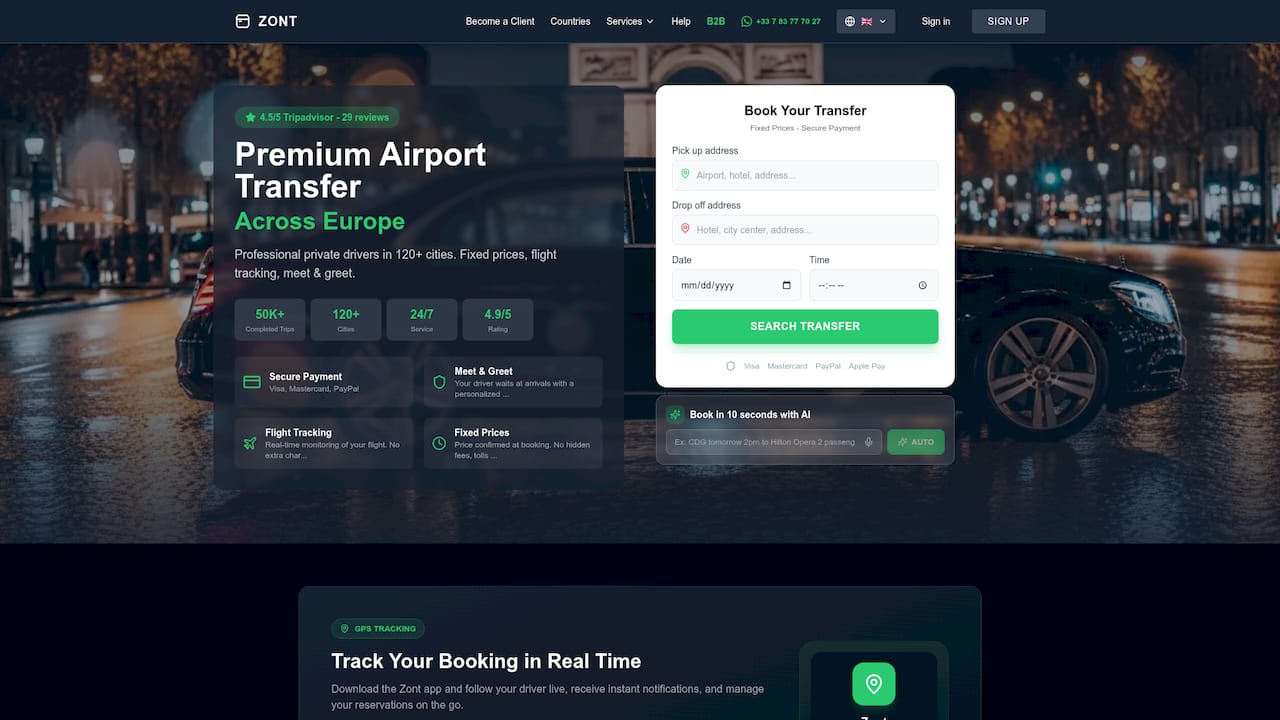
The service covers more than 120 cities across Europe, with premium vehicles including Mercedes, BMW, and minivans sized for families or groups with heavy luggage. Every booking includes real-time flight tracking, so a delayed landing doesn’t turn into a missed pickup, and 24/7 multilingual support means you’re never stuck explaining a problem in a language you don’t speak. Pricing is fixed at booking, no surge, no meter surprises, no hidden fees layered on after the fact.
If your next trip includes an early flight, a late arrival, or a family that needs a proper child seat waiting in the car, book your airport transfer before you fly rather than sorting it out at the curb. For city-specific routes, Zont Cab also runs dedicated pages for destinations like the Barcelona airport transfer and the Alicante airport transfer.
Where to Verify Local Taxi Rules and Fares
Rules shift by region, so check these sources before you travel, especially if your trip includes island transport or a smaller municipality:
- Madrid’s official taxi guidance covers city-specific identification, ranks, and payment norms.
- Madrid is the municipal source for current fares, contact numbers, and regulatory updates in the capital.
- Reporting on ride-hailing and taxi access in Spain breaks down child-seat expectations and regional coverage gaps.
- Coverage of VTC enforcement in the Balearic Islands explains rules specific to island travel.
If you’re heading somewhere outside Madrid or Barcelona, search that city’s own municipal transport page before you go. Local rules on fares, child seats, and licensed liveries can differ enough to matter, and a two-minute check beats an argument with a driver over a supplement you didn’t know existed.
Sources
- Q&A: What to know about catching a taxi or ride-hailing service in Spain
- La presión del taxi fuerza controles a Uber y Cabify por viajes en coches sin autorización
- Getting around Madrid by Taxi
- Madrid