Family Airport Vehicle Types: A Booking Guide

Most families traveling with kids, strollers, and checked bags need at least a minivan or large SUV for a private airport transfer. A sedan works for two adults and one small child with carry-ons only. Add a second child, a stroller, or a third passenger with luggage, and you need more room than most sedans can honestly provide.
Quick decision map:
- Small groups with minimal gear: Comfort sedan
- Small families with moderate luggage: Midsize or large SUV
- Families needing space for children and gear: Minivan/7-seat MPV
- Larger groups with extensive gear: Executive van or Sprinter
- Groups including wheelchair users: Wheelchair-accessible vehicle (WAV)
NHTSA sets the federal standards for child-seat safety in the U.S., and any provider you book should be able to confirm their seats meet those standards. Zont Cab’s fleet covers all of these categories, with fixed pricing and flight tracking built in.
Pro Tip: Luggage volume, not passenger count, is usually what forces families into a larger vehicle. Count your bags first.
Table of Contents
- What are the main types of family airport vehicles?
- How do you choose the right vehicle for your family?
- What premium features should families require from a transfer?
- What are the U.S. child-seat rules for airport transfers?
- When should you book a family airport transfer?
- Key Takeaways
- The part most families get wrong
- Useful sources for rules, seat standards, and booking
- Zont Cab: premium family transfers with no guesswork
What are the main types of family airport vehicles?
Every vehicle category serves a different combination of people and gear. Here is what each one actually holds.
| Vehicle Type | Realistic Passengers | Typical Checked Bags | Carry-Ons | Best For |
|---|---|---|---|---|
| Comfort sedan | 2–3 | 2 | 2 | Couple with one child, no stroller |
| Midsize SUV | 3–4 | 3–4 | 2–3 | Small family, light gear |
| Large SUV | 4–5 | 4 | 3 | Family of four with car seat + stroller |
| Minivan/7-seat MPV | 5–6 | 4–6 | 3–4 | Family with multiple kids and gear |
| Executive van/Sprinter | 7 | 8 | 4–6 | Large or multi-generational groups |
| Wheelchair-accessible vehicle | 3–5 + WAV user | 3–4 | 2–3 | Groups with mobility device users |
Comfort sedan
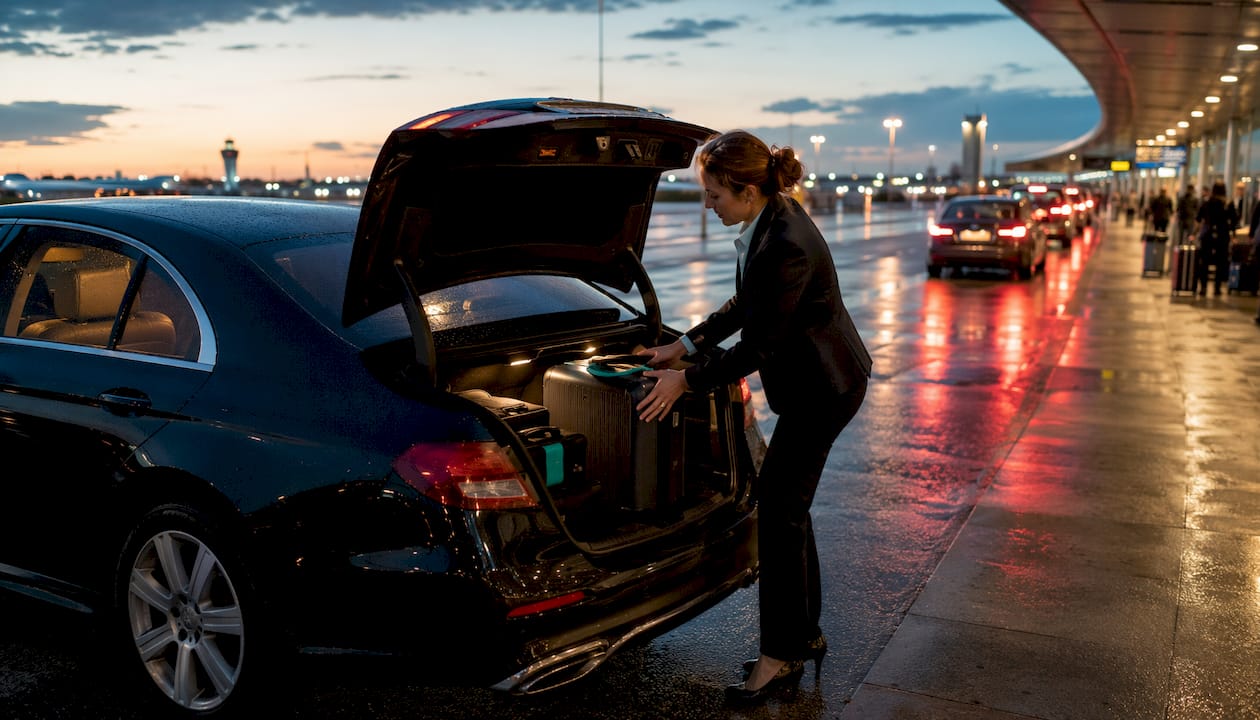
A sedan accommodates two adults and one child with limited trunk space, suitable for a couple of large suitcases and a carry-on. If anyone in the group has a rear-facing infant seat, that seat eats into the back row and may leave only one usable adult seat beside it.
Midsize and large SUV
SUVs typically provide substantial cargo space suitable for several large suitcases and carry-ons. That works well for a family of three or four with standard luggage. The large SUV offers extra headroom and cargo space useful for strollers and multiple bags. They also handle rural or rough-road routes better than minivans.
Minivan and 7-seat MPV
Minivans accommodate multiple passengers and suitcases, making them a practical choice for many traveling families. Sliding doors make curbside loading faster and safer with young children. The Mercedes V-Class is a common premium example in this category, offering a walk-through cabin and ISOFIX anchor points in multiple rows. Costs are notably higher than sedans for private transfers, but the additional space and convenience often justify this for families.
Pro Tip: Installing three child seats side-by-side can reduce the usable seating in a 7-seat cabin depending on row and anchor-point configuration. Always disclose seat types at booking.
Executive van and Sprinter
For groups of six or more, or two families traveling together, a Sprinter-style van is the only vehicle that keeps everyone in one ride. Such vans seat multiple passengers and offer large trunk volumes capable of accommodating many suitcases plus strollers. One vehicle, one driver, one bill.
Wheelchair-accessible vehicle
WAVs include accessibility features such as ramps or lifts and accommodate wheelchair users plus several additional passengers, with capacity varying by vehicle. Book these well in advance since fleet availability is limited.
How do you choose the right vehicle for your family?
People and gear together determine the vehicle. Count both before you look at any booking form.
- Count passengers by age. Children in car seats occupy a full seat and reduce adjacent seating due to seat width.
- Count large items. Each checked bag, stroller, travel crib, or car seat you are bringing counts as a large item.
- Convert bulky gear to suitcase equivalents. A standard stroller equals one to two large bags in cargo terms. A travel crib equals two. If bulky items exceed two large items, move up to a minivan or executive van.
- List car-seat types required. Infant rear-facing, convertible, forward-facing, and booster seats each have different anchor-point requirements. Disclose all of them.
- Note any airport access constraints. Some urban pickup zones are narrow; a Sprinter may need a specific bay.
- Book one size up when unsure. Luggage volume is the most common reason families misjudge their vehicle needs.
Questions to ask your provider before confirming
- What is the exact vehicle model and trunk volume in liters or suitcase count?
- Does the vehicle have ISOFIX anchor points in the rows where child seats will be installed?
- Can you confirm the seat types (infant, convertible, booster) and their weight ranges?
- Is meet-and-greet included, or is it an add-on?
- Does the fixed fare include waiting time, tolls, and airport fees?
- What is the cancellation policy and the latest change window?
A good step-by-step booking guide walks through these questions in sequence if you want a reference to follow while booking.
What premium features should families require from a transfer?
Flight tracking, meet-and-greet, pre-installed child seats, and fixed fares are the four features that separate a premium family transfer from a standard one. Each one removes a specific failure point.
- Flight tracking: The chauffeur monitors your arrival in real time and adjusts pickup if your flight lands early or late. No missed pickups, no extra waiting fees.
- Meet-and-greet: A named driver meets you inside the terminal with a sign. Critical for families with young children, strollers, or elderly travelers who cannot sprint to a curbside pickup zone.
- Pre-installed, inspected child seats: Provider-supplied seats avoid terminal logistics and reduce the risk of improper installation in an unfamiliar vehicle. Request them in writing: “Please pre-install N infant/convertible/booster seats and confirm ISOFIX anchor-point compatibility.”
- Fixed fare: No surge pricing, no meter running in traffic. The price you see at booking is what you pay.
- Multilingual chauffeurs: Useful for international families or when traveling with grandparents who speak a different language.
- Door-to-door assistance: The driver helps load and unload. Not a luxury when you have two kids, three bags, and a stroller.
Child seats typically carry an add-on fee with most premium providers. Flight tracking and meet-and-greet are usually standard at the premium tier. Confirm which features are included before you pay.
What are the U.S. child-seat rules for airport transfers?
Always confirm that provider-supplied seats meet NHTSA standards and are professionally installed before your trip. State rules vary on age, weight, and height thresholds, so check your destination state’s DMV guidance alongside federal NHTSA guidance.
| Seat Type | Typical Weight Range | Install Method | Booking Note |
|---|---|---|---|
| Infant rear-facing | 4 lb or more | ISOFIX or seat belt | Rear-facing only; confirm row has rear-facing clearance |
| Convertible | 5 lb rear-facing / forward-facing varies | ISOFIX or seat belt | Can be used in both directions; confirm anchor points |
| Forward-facing with harness | — | ISOFIX or seat belt | Requires top-tether anchor point |
| High-back booster | — | Seat belt only | No ISOFIX needed; confirm seat-belt geometry |
Pre-trip safety checklist:
- Confirm seat type and count in writing with your provider
- Ask whether the chauffeur is trained in installation inspection
- Request that seats are cleaned and sanitized before pickup
- Verify anchor-point availability for each seat type in the specific vehicle model
- Decide whether to bring your own seat if traveling with a newborn under 4 lb (below most rental seat minimums)
Private transfers reduce the risk of improper installation compared to self-installing in an unfamiliar rideshare vehicle at a busy terminal. That said, if you have a seat you know is correctly fitted to your child, bringing it is always a valid choice.
When should you book a family airport transfer?
Book at least 48–72 hours ahead for a standard family transfer. Child-seat provisioning and fleet allocation take time, and last-minute requests often mean the provider cannot guarantee the specific seat types you need.
- Same-day booking: Possible with some providers, but child seats and larger vehicles may not be available.
- 24–72 hours ahead: The recommended window for most family transfers with one or two car seats.
- One week or more: Required for peak travel periods (summer, holidays), multi-stop itineraries, or WAV requests.
- Reconfirm 24 hours before: Send your flight number and restate your seat requirements. This is when the provider locks in the vehicle and driver.
For arrivals, a pre-booked transfer with flight tracking means your driver adjusts automatically if your flight is delayed. The standard wait-time window at most premium providers is 45–60 minutes after landing for international arrivals. For departures, the driver tracks your pickup address and arrives at the agreed time.
Airport-specific access rules matter too. Some terminals offer meet-and-greet inside arrivals; others restrict drivers to curbside only. Meet-and-greet inside the terminal usually carries a small surcharge but is worth it with young children or strollers. Confirm which option your airport allows when you coordinate the pickup.
Key Takeaways
Choosing the right family airport vehicle comes down to counting people and gear together, then confirming child-seat compatibility before you pay.
| Point | Details |
|---|---|
| Count gear, not just passengers | Luggage volume determines vehicle size more often than passenger count does. |
| Disclose all car-seat types | Infant, convertible, and booster seats each need specific anchor points; confirm compatibility at booking. |
| Book one size up when unsure | When luggage or seat count is borderline, the next vehicle category removes the risk. |
| Book 48–72 hours ahead | Child-seat provisioning and fleet allocation require lead time; same-day requests often cannot be fulfilled. |
| Zont Cab covers all categories | Zont Cab offers sedans, SUVs, minivans, and executive vans with flight tracking, meet-and-greet, and fixed pricing across 120+ cities. |
The part most families get wrong
The single most common mistake in family airport transfers is treating vehicle selection as a passenger problem when it is actually a cargo problem. A family of four sounds like it fits in an SUV, and it does, until you add a stroller, two car seats, four checked bags, and a carry-on each. At that point, you need a minivan at minimum, and possibly a Sprinter.
The second mistake is assuming child seats are interchangeable. An infant rear-facing seat in a vehicle without rear-facing clearance in that specific row is a safety issue, not a minor inconvenience. Ask for the vehicle model, not just the vehicle category, and ask specifically which rows have ISOFIX anchor points and top-tether anchors. A provider that cannot answer that question is not ready for your booking.
One suggestion worth making: if you are traveling internationally or arriving late at night, request a pre-inspection photo of the installed seats before the driver leaves for the airport. Reputable providers will send it. If they push back, that tells you something.
Zont Cab’s family transfer features, including flight tracking and meet-and-greet, are the kind of operational details that make the difference between a smooth arrival and a chaotic one. Fixed pricing means no surprises at the end of a long flight.
Useful sources for rules, seat standards, and booking
- NHTSA: The federal authority on child-seat certification, installation standards, and weight/height requirements. Check here first for seat type eligibility.
- State DMV pages: Each state sets its own age, weight, and height thresholds for child-restraint laws. Search “[your state] child passenger safety law” to find the current rules for your destination.
- Zont Cab booking pages: Confirm vehicle availability, seat options, flight-tracking policy, and fixed fares across all covered cities.
- Zont Cab family transfer guide: Practical advice on stroller handling, curbside logistics, and what to include in your booking notes.
Zont Cab: premium family transfers with no guesswork
Families who pre-book a private airport transfer want one thing above everything else: certainty. The right vehicle, the right seats, the driver already tracking the flight.
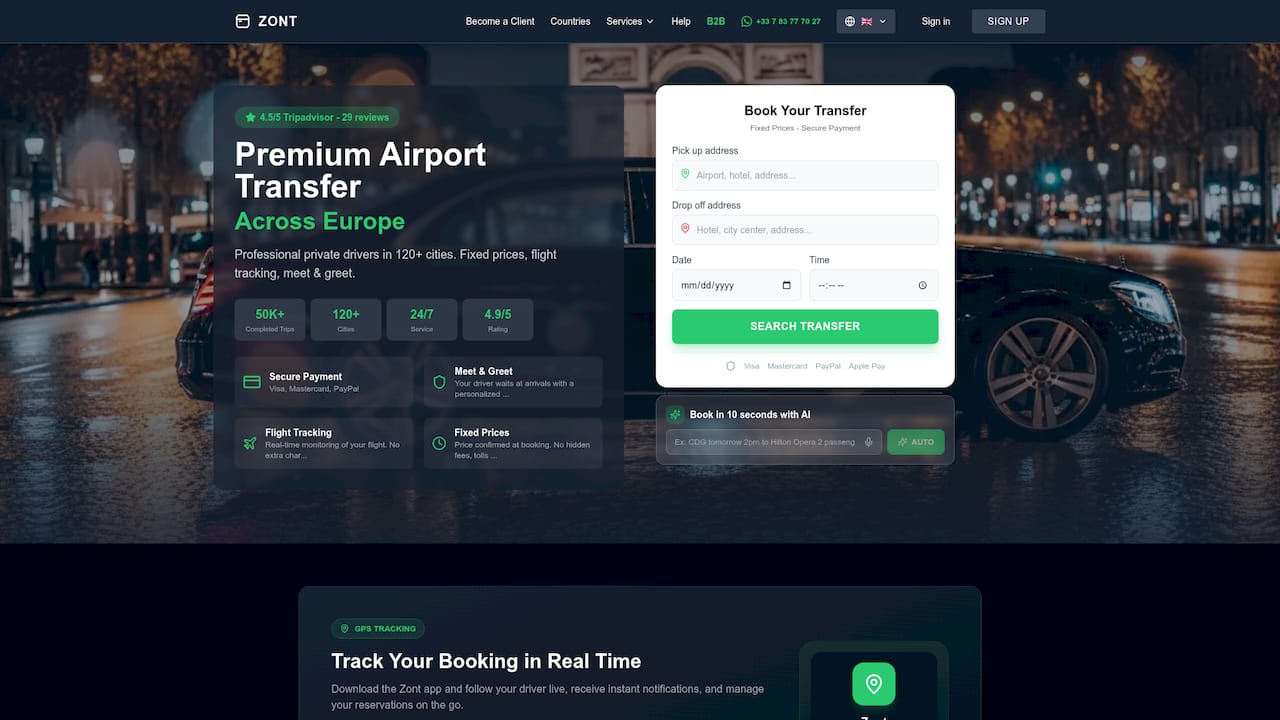
Zont Cab delivers exactly that across 120+ cities in Europe, with a fleet that covers every family configuration from a comfort sedan for two adults and a toddler to a Mercedes V-Class for a group of seven. Fixed pricing means the fare you see at booking is the fare you pay, including waiting time. Flight tracking means the driver adjusts automatically if your arrival is delayed. Meet-and-greet means someone is waiting inside the terminal with your name on a sign, not circling the curbside pickup zone while you wrestle a stroller through the crowd.
Child seats are available on request, pre-installed and inspected before pickup. Book your family airport transfer through Zont Cab and specify your seat types, passenger count, and any oversized gear in the booking notes. The team confirms availability and locks in the vehicle before you travel.