Shared vs Private Family Transfer: What Families Need to Know

A shared transfer is a pooled shuttle seat on a route that stops for multiple passengers; a private transfer is a reserved vehicle for your party only. For most families, the private transfer wins on comfort, luggage space, and predictability — though the shared shuttle earns its place for solo parents traveling light or short resort hops on a tight budget.
The cost gap closes faster than most people expect. Private vs shared airport transfer guides consistently show the break-even point sits around three passengers: once you’re booking three or more seats on a shared shuttle, a flat-rate private vehicle often costs the same or less when you factor in luggage fees and door-to-door delivery. Add a child seat, a stroller, and a delayed flight, and the math tips decisively toward private.
Three quick deciding criteria:
- Party size: Three or more travelers almost always break even or save money on a private transfer.
- Child seats: Private operators provide them on request; most shared shuttles don’t carry them at all.
- Arrival time: Late-night or early-morning flights need a waiting driver, not a shuttle timetable.
Table of Contents
- What a shared shuttle actually looks like for your family
- What a private transfer delivers for families
- How each option handles strollers, car seats, and family gear
- Journey time and stops: what your kids will actually experience
- Child seats, safety, and compliance: what to check before you book
- Door-to-door vs curb drop-off: why delivery accuracy matters to families
- How to choose the right transfer for your family
- How flight tracking, meet & greet, and fixed pricing cut family-trip stress
- Key Takeaways
- The case for predictability over per-seat savings
- Zont Cab: private family transfers across Europe, fixed price guaranteed
- Useful sources and further reading
What a shared shuttle actually looks like for your family
A shared transfer, also called a shuttle or pooled transfer, puts your family in a van or minibus alongside other passengers heading to nearby hotels or zones. The vehicle makes multiple stops, and your family shares luggage storage with everyone else on board.
Typical vehicles run 8–16 seats. Luggage goes into a shared hold or overhead racks, which means bulky items compete for space. Scheduling works one of two ways: fixed timetables (the shuttle departs at set intervals regardless of your flight time) or demand-pooled vans that wait until enough passengers have arrived to fill the vehicle. Both models add unpredictability for families.
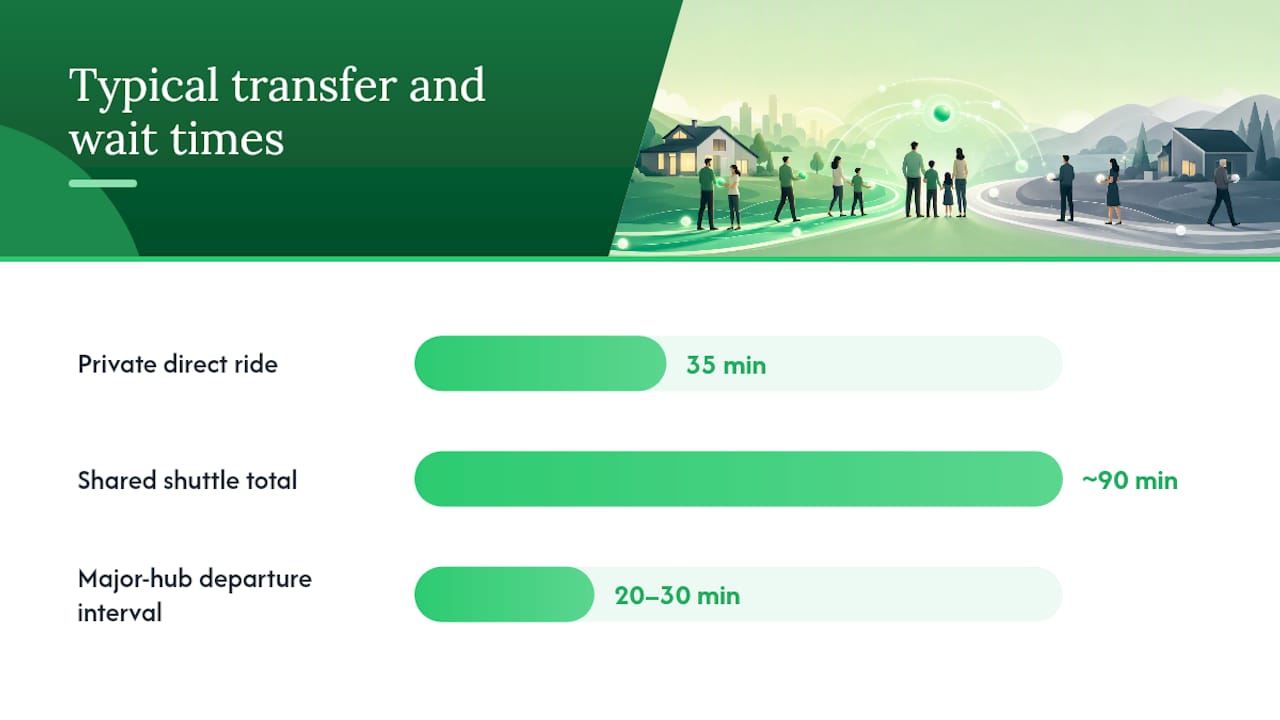
Picture a family of four arriving at Orlando International at 6 PM. After clearing customs and collecting bags, they join a shuttle queue. The van waits for two more passengers, then makes four hotel stops before theirs. Total transfer time: roughly 90 minutes for what would have been a 35-minute direct ride.
Shared shuttles run most reliably at busy resort hubs and peak travel seasons, where high passenger volume keeps wait times short. Off-peak or at smaller airports, the wait-to-fill delay can stretch significantly.
- Fixed timetables may not align with your actual arrival time.
- Shared luggage bays limit stroller and oversized-bag storage.
- Multiple stops mean unpredictable total journey time.
- Child-seat availability is rare on shared services.
Pro Tip: If you’re considering a shared shuttle, check the operator’s departure frequency before booking. At major resort airports, shuttles may run every 20–30 minutes. At smaller regional airports, you might wait over an hour for the van to fill.
What a private transfer delivers for families
A private airport transfer is a pre-booked vehicle reserved exclusively for your party, with a fixed price agreed before you travel and a driver who goes directly to your destination. No other passengers, no extra stops, no shared luggage space.
For families, the vehicle choice matters. Common options include:
- Sedan (4 seats): Fine for two adults and one child traveling light.
- SUV (5–6 seats): Handles a family of four with standard luggage comfortably.
- 7-seat minivan or Mercedes V-Class: The go-to for larger families, car seats, strollers, and multiple suitcases. Zont Cab’s Mercedes V-Class family van seats up to seven and carries generous luggage.
- Mercedes E-Class or S-Class: Better suited to two adults with minimal bags.
Standard services on a quality private transfer include meet-and-greet at arrivals, flight tracking so the driver adjusts for delays, help loading luggage, and a flat fare with no meter running. A family of four arriving at JFK at 11 PM boards their minivan within minutes of clearing customs, child seat already installed, driver holding a name sign. They’re at their Manhattan hotel in 45 minutes with no stops.
Private transfers are especially valuable for:
- Late-night or early-morning arrivals when shuttle timetables don’t run.
- Families with infants or toddlers who need a correctly fitted car seat.
- Trips with heavy luggage, strollers, or sports equipment.
- Travelers with elderly or mobility-limited family members.
How each option handles strollers, car seats, and family gear
Private transfers give your family the entire trunk. A 7-seat minivan typically carries four large suitcases, two carry-ons, and a full-size stroller without anyone sitting with a bag on their lap. That dedicated space is the single biggest practical advantage for families with young children.

Shared shuttles work differently. The hold is shared, and operators often apply size or weight restrictions to keep loading times short. Strollers frequently require folding and may incur an extra fee. On a fully loaded shuttle, there’s no guarantee your stroller fits at all.
For multi-destination trips or long layovers, the difference compounds. Unpacking a stroller from a shared hold at each stop is slow and stressful. A private vehicle keeps everything loaded until you reach your hotel door.
A rough rule of thumb: if your party carries many large bags or travels with a stroller, a private transfer stops being a luxury and becomes a practical necessity.
- Shared shuttles: limited shared hold, stroller fees common, no guarantee of space.
- Private transfers: dedicated trunk, stroller loaded once, no extra luggage charges on most flat-rate bookings.
- Oversized items (car seats, sports gear, wheelchairs): always confirm in writing with a private operator; shared shuttles rarely accommodate them.
Pro Tip: When booking a private transfer with a stroller, note the stroller model in the booking comments. Operators can then confirm the right vehicle size and avoid surprises at pickup. Check Zont Cab’s stroller transfer guide for packing specifics.
Journey time and stops: what your kids will actually experience
Shared shuttles commonly take 1.5–2 times longer than a direct private transfer, depending on the number of stops and how far apart the drop-off hotels are. That’s not a minor inconvenience when you have a toddler who missed a nap.
A concrete comparison: a 30–45 minute private ride from the airport to a downtown hotel commonly becomes a 1.5–2 times longer shuttle trip once you add passenger collection, multiple hotel stops, and any traffic delays at each drop-off. For a child who’s been on a transatlantic flight, that extra hour in a van with strangers is genuinely miserable.
Predictability matters as much as speed. A private transfer with flight tracking gives you a firm arrival window you can plan a child’s meal or bedtime around. A shared shuttle gives you an estimate that can shift by an hour depending on who else booked that day.
The practical impact on families:
- Nap schedules and feeding times are harder to maintain on a 90-minute shuttle with stops.
- Bathroom breaks mid-route are rarely accommodated on shared shuttles.
- Night arrivals on shared services risk children falling asleep in the van and waking at the wrong stop.
- A direct private route lets you tell your kids exactly how long until they reach the hotel.
For early-morning departures, the calculus flips slightly: a shared shuttle may run on a predictable fixed schedule that suits your timeline. But for arrivals, especially with tired children, the direct route wins.
Child seats, safety, and compliance: what to check before you book
Child-seat availability is the most overlooked booking detail in family transfers. Many shared shuttles don’t carry child seats at all; private transfer companies commonly provide them on request. That distinction is not a minor service difference — in most U.S. states, a child under a certain age or weight must ride in an approved restraint, and the law applies whether you’re in a taxi, rideshare, or transfer vehicle.
State requirements vary. Some states exempt taxis and for-hire vehicles from child-seat laws; others do not. Check your state’s DMV or transportation authority rules before assuming you’re covered. The NHTSA child-seat guidelines provide a federal baseline, but state law governs enforcement.
When booking, ask these exact questions:
- Do you carry rear-facing infant seats, forward-facing toddler seats, and booster seats?
- What is the weight and height range for each seat type you provide?
- Is the child seat included in the flat fare, or is there an additional charge?
- Can you confirm the seat type in writing before travel?
If the operator can’t confirm a seat type in writing, book elsewhere. Vague answers at booking become real safety gaps on arrival.
Also verify: driver licensing and background screening, vehicle registration and inspection status, and a readable vehicle ID (plate number or booking reference) sent to you before travel. Zont Cab’s safety comparison guide covers what vetted driver standards look like versus unregulated alternatives.
Safety callout: A child-seat request is only confirmed when it’s in your booking confirmation, not just verbally agreed over the phone.
Door-to-door vs curb drop-off: why delivery accuracy matters to families
Delivery accuracy describes where your transfer actually ends. A private transfer drops you at your hotel entrance, lobby door, or specified address. A shared shuttle may drop you at a designated zone, a curb shared with other vehicles, or even an off-site lot where you transfer to a second vehicle.
Shuttles often operate on fixed routes with centralized pickup and drop-off points rather than hotel doors. At busy airports, shuttle operators use off-airport staging lots to avoid terminal congestion, which means your family walks from a remote lot to the terminal with all your bags. That’s manageable for two adults traveling light. With a stroller, a toddler, and four suitcases, it’s a genuine ordeal.
Private transfers solve this with meet-and-greet: your driver meets you inside the arrivals hall, helps with luggage, and walks you to the vehicle. No guessing which curb, no dragging bags across a parking structure.
For families with elderly members, mobility aids, or young children, door-to-door delivery isn’t a comfort upgrade. It’s a practical requirement.
Before booking any transfer, confirm:
- Exact pickup point (arrivals hall, curbside, or off-site lot).
- Whether meet-and-greet is included or costs extra.
- Precise drop-off address (hotel entrance, not just hotel zone).
- Waiting policy if your flight is delayed.
How to choose the right transfer for your family
Work through these steps before you book:
- Count your party. Three or more passengers? Run the flat-rate private calculation before assuming shared is cheaper.
- Inventory your luggage. More than four large bags or a stroller? Private is almost certainly the right call.
- Check your arrival time. Late-night or early-morning? Confirm the shuttle actually runs at that hour before booking it.
- Identify child-seat needs. Any child under the applicable age or weight threshold in your destination state? Require written confirmation of the correct seat type.
- Assess mobility needs. Elderly family members or anyone with limited mobility? Door-to-door private service removes every transfer point.
Exact questions to ask when booking:
- What vehicle type and seat count will you send?
- Do you track flights and adjust pickup if we’re delayed?
- Is meet-and-greet included, and where exactly do you meet us?
- What is your luggage policy, and are strollers included in the flat rate?
- What is your cancellation and late-flight policy?
- Can you confirm the child-seat type in writing?
Red flags that should make you look elsewhere:
- No flight tracking offered.
- Vague or verbal-only child-seat confirmation.
- Vehicle type listed as “sedan or similar” with no specifics.
- No written cancellation policy.
If a provider can’t confirm a child seat or meet-and-greet in writing, that’s your answer. Move on. See Zont Cab’s family vehicle booking guide for a breakdown of which vehicle fits which family size.
Pro Tip: Screenshot your booking confirmation showing the vehicle type, child-seat confirmation, driver name, and waiting policy. Save it offline. Airport Wi-Fi is unreliable, and you’ll want that information the moment you land.
How flight tracking, meet & greet, and fixed pricing cut family-trip stress
Flight tracking means your driver monitors your flight in real time and adjusts the pickup time if you land early or late. You don’t need to call anyone. You don’t pay a waiting fee because your flight was delayed. The driver is simply there when you arrive.
Meet-and-greet takes that one step further: your driver stands in the arrivals hall with your name on a sign. For a family carrying two children, a stroller, and four bags through an unfamiliar airport, that moment of seeing your name removes a significant amount of stress.
Fixed pricing eliminates the other major anxiety: the unknown fare. Taxi meters run. Rideshare surge pricing spikes during peak arrival times. A flat-rate private transfer quoted at booking is the price you pay, period. No surprises at the end of a long travel day.
A practical example: your family’s flight from London to New York is delayed 90 minutes. With a flat-rate private transfer and flight tracking, your driver adjusts automatically. You clear customs, see your name in arrivals, and load into a waiting minivan. With a shared shuttle, you’d need to call the operator, rebook the next available departure, and wait again.
- Save your booking confirmation with driver name, vehicle plate, and waiting policy before you travel.
- Screenshot the flight-tracking confirmation so you have it offline.
- Note the operator’s 24/7 support number separately from the app.
Pro Tip: Ask your transfer provider to send a driver-contact number at least two hours before pickup. If anything changes at the airport, you want a direct line, not a customer-service queue.
Key Takeaways
For most families of three or more, a private transfer delivers better value than a shared shuttle once luggage, child seats, and direct routing are counted against the flat fare.
| Point | Details |
|---|---|
| Break-even at three passengers | A private flat rate often matches three shared seats when luggage and door-to-door delivery are included. |
| Child seats require written confirmation | Private operators provide seats on request; shared shuttles rarely carry them — always get it in writing. |
| Shared shuttles journey time | Shared shuttles commonly take 1.5–2 times longer than direct private transfers, which matters most for tired children and tight schedules. |
| Luggage volume triggers private transfer | More than four large bags or a stroller makes a private vehicle a practical necessity, not a luxury. |
| Zont Cab for families | Zont Cab offers fixed pricing, flight tracking, meet-and-greet, and family-sized vehicles across 120+ European cities. |
The case for predictability over per-seat savings
Most family-transfer advice focuses on cost per seat, which is the wrong metric for most families. The real cost of a shared shuttle isn’t the ticket price. It’s the 90-minute ride with a hungry four-year-old, the stroller fee nobody mentioned at booking, and the 11 PM arrival when the last shuttle departed at 10:30.
Parents consistently underestimate how much predictability is worth at the end of a travel day. A flat-rate private transfer with flight tracking doesn’t just save time. It removes the mental load of managing unknowns while also managing children. That’s the actual value proposition, and it’s why the break-even calculation almost always tips toward private for families once you run it honestly.
The one scenario where shared genuinely wins: a solo parent with one older child, standard luggage, and a daytime arrival at a resort airport with frequent shuttles. Outside that narrow window, the math and the experience both favor private.
Use the booking checklist above before you reserve anything. The questions about child seats and flight tracking aren’t optional extras. They’re the difference between a transfer that works and one that doesn’t.
Zont Cab: private family transfers across Europe, fixed price guaranteed
Families who’ve worked through this comparison and landed on “private transfer” have one practical next step: find a provider that actually delivers on flight tracking, confirmed child seats, and a flat fare with no surprises.
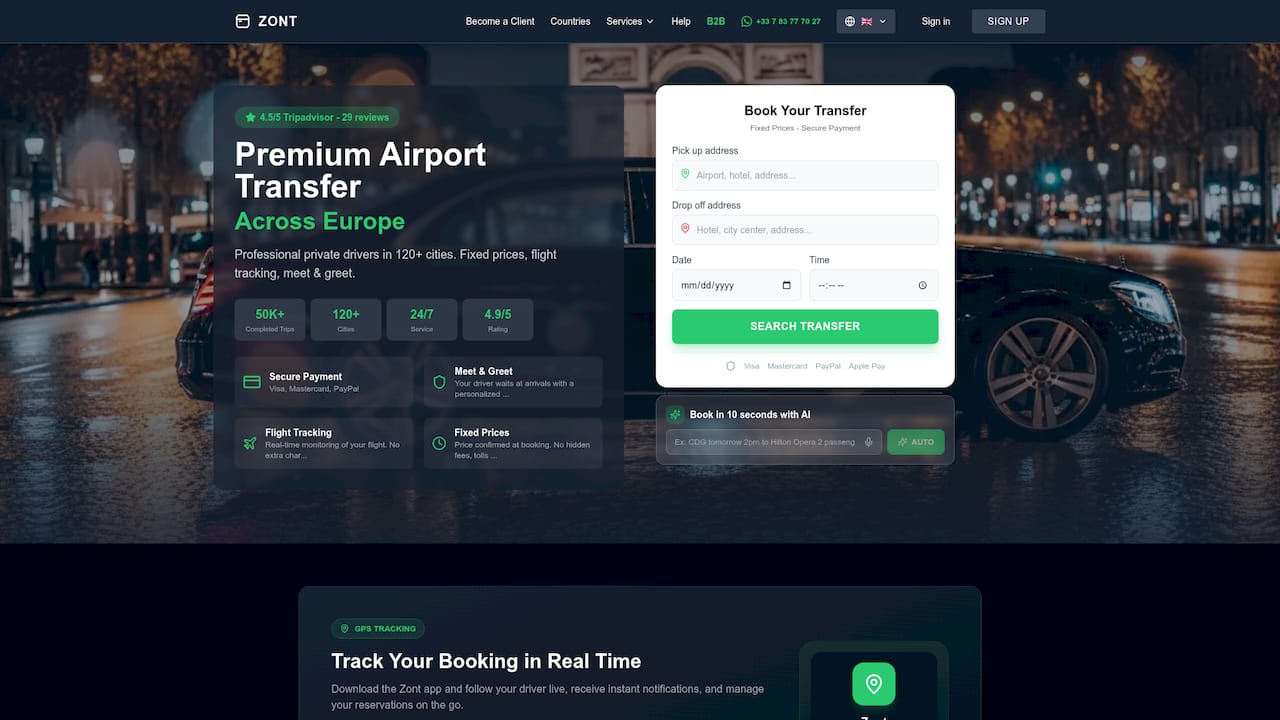
Zont Cab covers airport transfers across 120+ European cities with premium vehicles sized for families, including 7-seat Mercedes V-Class minivans that handle strollers, car seats, and full luggage loads without compromise. Every booking includes real-time flight monitoring, a meet-and-greet driver in arrivals, and a fixed price confirmed before you travel. Over 50,000 completed trips and a 4.5-star TripAdvisor rating back that up. Book your family transfer at Zont Cab and get your vehicle type, child-seat confirmation, and driver details in writing before you leave home.
Useful sources and further reading
These sources informed the comparisons and checklists throughout this article. Each is worth a direct read if you want to dig into a specific area before booking.
- Private vs Shared Airport Transfer — Quick Guide
- What Is an Airport Transfer? Complete 2026 Guide
- Private vs Shared Airport Transfer: Which Should You Choose? | Airport Transfer Portal Blog
- Why a Chauffeur Service is Perfect for Your Family Trip
- What Is an Airport Transfer? Complete Guide (2026) | My Private Transfers